
Views: 174 Author: Site Editor Publish Time: 2026-06-19 Origin: Site


Procuring scaffolding systems represents a massive capital expenditure for construction and industrial companies. Buyers often chase initial savings by choosing cheaper finishes upfront. Sadly, these decisions frequently backfire. They lead to ballooning maintenance budgets and frequent component replacement costs over the equipment's lifespan. We need to clearly evaluate the true commercial and operational differences between traditional paint coatings and hot-dip galvanizing. Selecting the wrong surface treatment significantly impacts Life Cycle Cost (LCC). It also dictates site safety compliance and limits your overall asset utilization rates.
In this comprehensive guide, you will discover how these two popular corrosion protection mechanisms differ. We will analyze environmental suitability, break down long-term financial models, and examine regulatory standards. You will walk away knowing exactly which finish maximizes safety and profitability for your specific fleet size.
Protection Mechanism: Paint provides a simple barrier; hot-dip galvanizing offers both a metallurgical bond and sacrificial cathodic protection.
Cost Horizon: Painted scaffolding offers lower initial capital outlay, but galvanized scaffolding achieves a lower total Life Cycle Cost (LCC) within 3 to 5 years of active use.
Inspection Reliability: Paint can mask structural rust underneath the coating; galvanized surfaces wear predictably, simplifying safety audits.
Application Context: Paint remains viable for short-term, indoor, or highly climate-controlled projects, while galvanizing is mandatory for offshore, industrial, and heavy-duty environments.
Understanding surface treatments requires looking beyond aesthetics. We must examine how these coatings perform on a molecular level. The fundamental difference lies in how each method interacts with the underlying steel substrate.
Paint acts solely as a physical barrier against the elements. It sits on top of the steel like an envelope. If workers scratch or chip this envelope during transport, the exposed steel immediately begins oxidizing. Moisture and oxygen penetrate the breach. Rust then creeps underneath the surrounding paint layer. This process causes the paint to blister and peel off rapidly.
Hot-Dip Galvanizing (HDG) operates on an entirely different scientific principle. During the manufacturing process, clean steel dips into a bath of molten zinc. The zinc reacts directly with the iron in the steel. They form distinct zinc-iron alloy layers. This reaction creates a metallurgical bond. If rough handling scratches the surface, the surrounding zinc sacrifices itself. It corrodes preferentially to protect the exposed steel. We call this phenomenon cathodic protection.
To fully understand this durability, we can examine the specific layers formed during the HDG process:
Gamma Layer: The innermost zinc-iron alloy layer, which bonds directly to the base steel.
Delta Layer: A highly durable transition layer containing roughly 10% iron.
Zeta Layer: A dense alloy layer that is actually harder than the base steel itself.
Eta Layer: The outermost layer of pure, ductile zinc that absorbs initial impact shock.
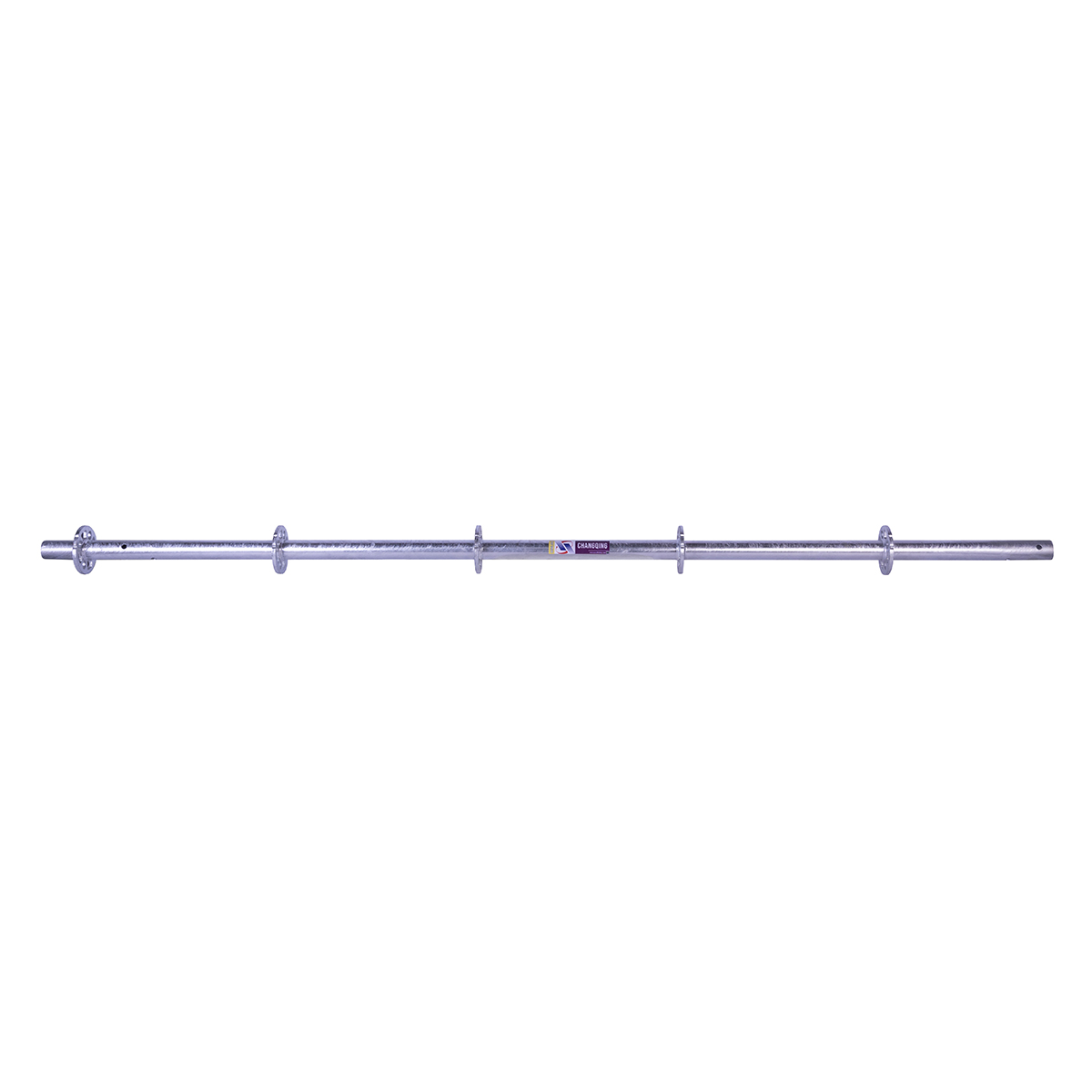
This metallurgical difference becomes obvious when we look at specific scaffolding components. Let us compare the daily reality of a painted kwikstage ledger against an HDG equivalent. Ledgers endure severe abuse. Scaffolders strike the connection points with hammers during assembly and dismantling. A painted ledger quickly loses its coating at these high-impact joints. The exposed steel rusts, which ultimately weakens the connection's structural integrity. The HDG ledger easily withstands these hammer strikes because its alloy layers resist mechanical damage.
Furthermore, internal pipe protection differs drastically. Liquid zinc flows completely inside the hollow tubes during the hot-dip process. It coats the interior walls thoroughly. Paint typically covers only the exterior surface. Condensation builds up inside hollow scaffolding tubes on job sites. This trapped moisture silently destroys painted tubes from the inside out.
Site conditions dictate component survival rates. You must match your scaffolding finish to the environmental demands of your typical projects.
Coastal developments, offshore oil rigs, and chemical plant environments absolutely require HDG scaffolding. High-salinity air aggressively attacks metal surfaces. Salt acts as a powerful catalyst for electrochemical rusting. Painted components face incredibly high failure rates in these aggressive atmospheres. Micro-pores in the paint film allow salt molecules to reach the steel rapidly.
Load-bearing components face compounded risks in bad weather. You must prioritize using a corrosion-resistant steel plank for high-traffic walkways. Workers drop heavy tools, drag abrasive materials, and step continuously on these platforms. Rain and mud sit on the surface. Standard paint strips away within weeks under such relentless physical and environmental abuse. Galvanized planks endure this severe friction while maintaining a safe, rust-free walking surface.
We must acknowledge where painted scaffolding still makes commercial sense. Paint performs adequately for indoor masonry work or climate-controlled warehouse renovations. Temporary deployments in arid, dry climates also suit painted systems well. If your business model relies on short-term rentals strictly constrained by upfront budgets, paint remains a viable short-term option.
Scaffolding rarely sits still. Handling and transport durability presents a massive challenge for fleet managers. Equipment suffers severe abrasion during erection, dismantling, and truck transit. Forklifts gouge the bundles. Workers toss frames onto hard concrete. As mentioned earlier, HDG alloy layers resist this abrasion far better than cured paint. Standard paint shatters upon impact. Zinc alloys absorb the shock and remain firmly bonded to the steel.
Procurement teams often struggle to secure budget approvals for premium equipment. We must evaluate the financial data beyond the initial purchase order.
Painted scaffolding offers a distinctly lower initial capital outlay. When evaluating bids, buyers usually notice a significant premium for HDG components. Galvanizing generally costs 15% to 25% more upfront than basic paint finishes. This initial sticker shock frequently deters procurement managers focused strictly on quarterly budgets.
The true financial burden of painted scaffolding hides in its Operating Expenditures. Painted systems carry massive, recurring hidden costs. Maintenance crews spend countless hours wire-brushing rust off joints. They must perform continuous spot-painting and touch-ups between deployments. This labor costs money. Worse, this maintenance creates expensive equipment downtime. Your assets sit unutilized in the yard instead of generating rental revenue on a job site.
We use an LCC model to determine long-term profitability. Galvanized scaffolding typically crosses the break-even point and becomes more profitable between year three and year five. This exact timeline depends heavily on your fleet utilization rates and labor costs. Once past this break-even horizon, HDG systems generate significantly higher profit margins because maintenance costs drop to near zero.
Scaffolding Financial Performance Chart
Financial Metric | Painted Scaffolding | Galvanized Scaffolding |
|---|---|---|
Initial CapEx | Low (Baseline) | Moderate (+15% to 25%) |
Annual Maintenance Labor | High (Wire brushing, repainting) | Minimal (Basic cleaning) |
Average Downtime | High (Days/Weeks per year) | Low (Immediate turnaround) |
LCC Break-Even Point | N/A | Years 3 to 5 |
Secondary Market Resale | Poor (Often scrap value) | Excellent (Retains high premium) |
Inventory eventually reaches the end of its useful lifecycle. When liquidation time arrives, galvanized inventory retains a significantly higher secondary-market value. Used equipment buyers gladly pay premium prices for structurally sound HDG systems. Conversely, flaking, heavily rusted painted inventory often sells merely for its raw scrap metal weight.
Financial considerations matter, but site safety remains the ultimate priority. Scaffolding failures lead to catastrophic injuries and massive legal liabilities.
Safety audits rely almost entirely on visual inspections by a competent person. Here, the realities of painted scaffolding introduce severe risks. We previously discussed under-film corrosion. This invisible rusting silently degrades the steel beneath an intact layer of paint. A scaffold frame might look perfectly fine superficially. Inside, the tube walls could be perilously thin. This unpredictability creates an unacceptable risk profile.
HDG dramatically simplifies competent-person inspections. Galvanized surfaces weather in a highly predictable manner. They transition slowly from a shiny silver appearance to a uniform matte gray. Inspectors can easily spot structural deformation or deep gouges. The zinc layer never hides underlying structural rust.
To ensure maximum safety, buyers must strictly specify the hot dip galvanized scaffold standard during procurement. Global compliance benchmarks define the acceptable zinc coating thickness required for structural integrity. Standards like ASTM A123 in North America or EN ISO 1461 internationally provide exact micron measurements for coatings.
Always request material mill certificates from your manufacturer before placing an order.
Demand official galvanizing compliance documents proving adherence to ISO 1461 or ASTM A123.
Specify minimum zinc coating thickness requirements in your purchase contracts.
Conduct random batch testing upon delivery using an electronic coating thickness gauge.
Engineering sometimes demands the benefits of both systems simultaneously. We refer to this hybrid approach as the Duplex System.
The Duplex System involves applying a specialized paint coating directly over hot-dip galvanized steel. This combination creates an incredible protective synergy. The Duplex System extends overall corrosion resistance by 1.5 to 2.5 times compared to the sum of each treatment applied individually. The paint protects the zinc from premature weathering. Concurrently, the underlying zinc prevents rust from undercutting the paint if it gets scratched.
Several scenarios justify the extra cost of a Duplex System. Safety color-coding represents the most common use case. You might paint safety gates, toe boards, or specific hazard ledgers in high-visibility yellow. Retaining the HDG undercoat guarantees structural longevity beneath the warning colors. Additionally, heavy civil contractors often face strict corporate branding requirements on high-visibility urban jobsites. They paint their HDG scaffolding frames in corporate colors to serve as massive billboards.
Implementation requires extreme caution and professional expertise. Standard paint will immediately peel off a smooth, newly galvanized surface. The zinc repels it. You must execute specific surface preparation techniques to ensure adhesion. Technicians utilize a process called sweep blasting. This technique gently etches the zinc to create a microscopic profile without removing the protective layer. We strongly caution against DIY over-painting in your equipment yard. Always utilize professional industrial coating facilities when requesting a Duplex System.
Choosing the right surface finish dictates your operational success and long-term profitability. Your decision framework should remain straightforward. Choose paint strictly for short-term, low-budget, or indoor applications where weather exposure remains minimal. Standardize your core fleet on galvanized scaffolding for multi-year asset lifespans. HDG thrives in heavy industrial use and unequivocally delivers the maximum Return on Investment.
You must take proactive procurement steps today. Shortlist suppliers who readily provide verifiable HDG compliance certificates. Scrutinize their quality control documentation thoroughly. We recommend contacting your manufacturing partners directly to request a comprehensive LCC comparison quote based on your specific fleet size and utilization rate.
A: No. Cold galvanizing is simply industrial paint heavily loaded with zinc dust. It lacks the critical metallurgical bond found in true HDG. While it offers minor sacrificial properties, it chips easily upon impact. Cold galvanizing cannot match the abrasion resistance or longevity of hot-dipped components.
A: HDG adds roughly 5% to 7% to the total weight of the scaffolding component. Reputable manufacturers fully factor this minor weight increase into their structural load ratings. It does not negatively impact handling, worker fatigue, or transportation logistics on standard job sites.
A: Galvanized systems boast exceptionally long lifespans. They can easily last over 50 years in rural or dry environments before requiring any maintenance. In severe industrial or coastal environments subjected to salt spray, you can expect 20 to 30 years of reliable, rust-free performance.


