
Views: 148 Author: Site Editor Publish Time: 2026-06-29 Origin: Site


Incorrect estimations for scaffolding load capacity routinely cause severe safety hazards on commercial sites. Site managers also face rigid regulatory compliance penalties and massive project delays when temporary structures fail. Moving beyond guesswork is absolutely critical for job site safety.
Purchasing or renting the right equipment requires you to step past theoretical load estimates. You must deeply understand exact system tolerances, complex material constraints, and strict regulatory safety margins. A generic approach simply will not suffice for heavy-duty applications. Relying on basic assumptions puts both lives and budgets at risk.
This guide provides a highly transparent, standard-aligned framework to accurately calculate your scaffolding load capacity. We show you exactly how to evaluate critical structural components and confidently vet material suppliers. You will learn everything needed to ensure safety and structural compliance across complex industrial construction projects.
Scaffolding load capacity is dictated by the weakest link in the system, requiring a mandatory 4:1 safety factor (OSHA standard) to ensure compliance.
Load ratings are strictly categorized into Light (25 psf), Medium (50 psf), and Heavy-Duty (75 psf) classifications based on intended trade usage.
High-capacity applications demand specific structural configurations, such as verified load-bearing ringlock standards and reinforced platforms.
Evaluating a scaffolding supplier requires verifiable third-party testing data, not just generic maximum load claims.
You cannot estimate safe load limits based on visual inspections alone. Regulatory agencies govern exactly how much weight temporary structures can hold. Understanding these baselines forms the foundation of any safe construction project.
OSHA enforces a rigorous mathematical rule for structural safety. Every scaffold and its components must support their own weight. They must also support at least four times the maximum intended load. We call this the 4:1 safety factor. It accounts for unpredictable dynamic forces. Workers drop heavy tools. Wind gusts strike the structure suddenly. Metal fatigues over time. The safety factor ensures the structure remains stable even under extreme, unforeseen stress.
Industry standards divide scaffolding load capacity into three distinct tiers. You measure these ratings in pounds per square foot (psf). Each classification aligns directly with specific trade activities.
Light-Duty (25 psf): This tier safely supports workers and minimal hand tools. It serves best for basic inspections, commercial painting, or light maintenance work. Do not use this classification for staging heavy materials.
Medium-Duty (50 psf): This middle tier supports workers along with substantial material loads. We recommend it for bricklaying, exterior plastering, and moderate material staging.
Heavy-Duty (75+ psf): Industrial jobs require maximum strength. Stone masonry, heavy material staging, and major demolition work fall into this category. These applications mandate specialized components, such as a heavy-duty scaffold platform, to prevent dangerous plank deflection.
Mismatching the duty classification to your actual project loads triggers severe consequences. OSHA issues hefty fines for non-compliant staging. Furthermore, overloading a light-duty frame can cause catastrophic buckling. Structural failures halt projects entirely. They also expose contractors to massive legal liabilities and voided insurance policies.
Calculating overall capacity requires precision. You must categorize all weights into two distinct groups. Mixing these groups leads to dangerous mathematical errors.
The dead load represents the total weight of the scaffolding system itself. It remains constant throughout the project. You must calculate the weight of all structural steel. This includes frames, planks, guardrails, base plates, and toe boards. Moisture can affect this number. Wooden planks absorb rainwater, which significantly increases the baseline dead load.
The live load includes everything added to the structure. This number fluctuates daily. It includes the total weight of workers, power tools, and staged materials. You must also factor in environmental variables. Wind forces push against netting. Snow accumulates on platforms. You must add these dynamic factors into your total live load calculations.
Follow these standard engineering steps to determine your exact requirements:
Calculate total platform area: Multiply the length of the platform by its width to find the square footage.
Determine the required duty rating: Review your planned trade activities. Select the corresponding 25, 50, or 75 psf rating.
Find the Maximum Intended Load: Multiply your total platform area by your chosen duty rating.
Apply the safety factor: Multiply your Maximum Intended Load by four. This final number dictates the required ultimate failure threshold your supplier must guarantee.
Engineering calculations demand conservative assumptions. You must assume an uneven load distribution. Workers rarely spread materials perfectly across a platform. They often stack bricks on one side. This creates concentrated point loads. Calculations should reflect these worst-case scenarios rather than ideal, balanced conditions.
Not all modular systems perform equally under pressure. The method used to connect horizontal ledgers to vertical posts fundamentally changes the scaffolding load capacity.
Connection nodes dictate how stress travels through the structure. A rigid connection transfers vertical weight efficiently down to the ground. A loose connection allows horizontal sway. Sway rapidly diminishes the overall safe working load (SWL).
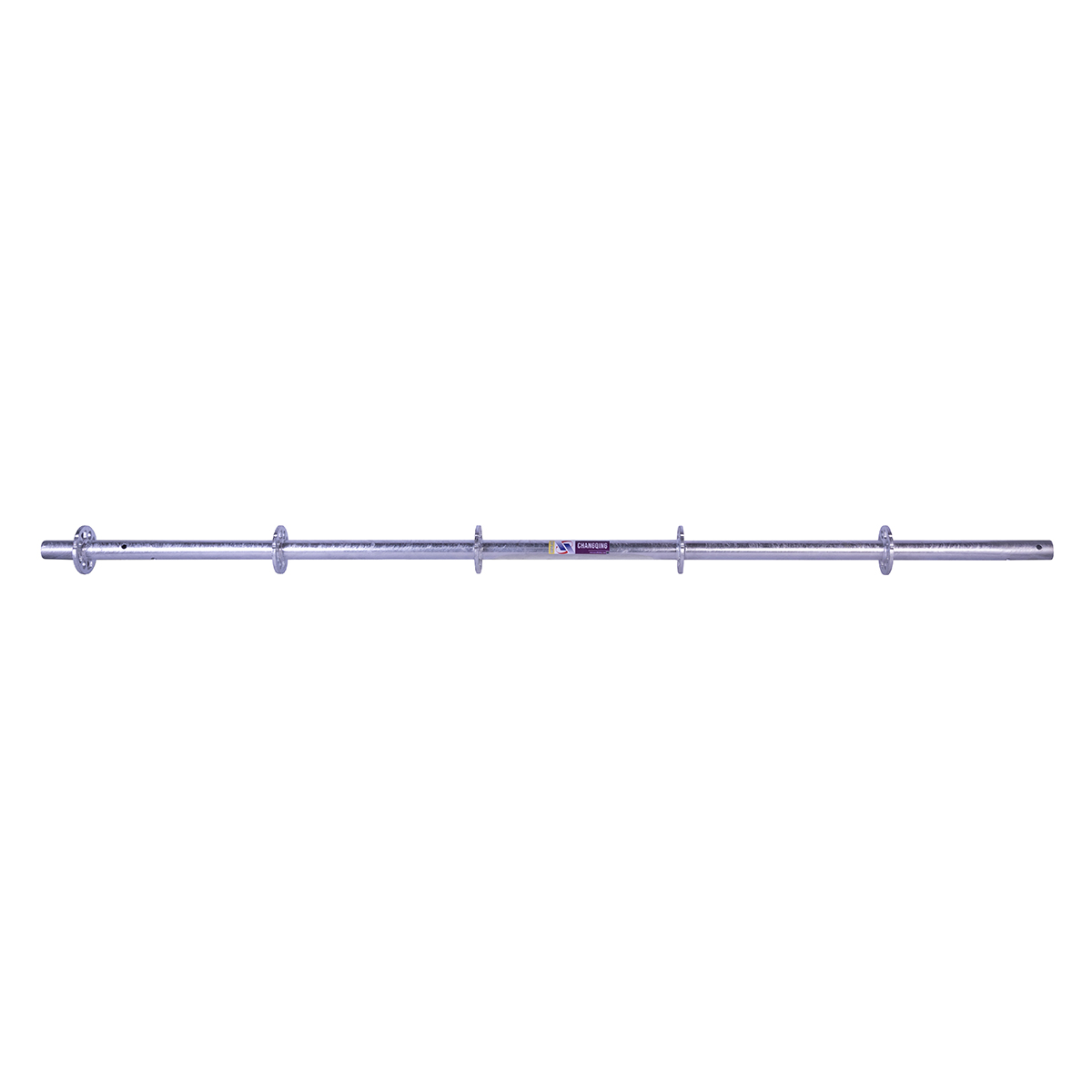
Ringlock represents the modern standard for high-capacity applications. The system features circular rosette joints welded onto vertical posts. These rosettes allow up to eight connections per node. The wedge-pin locking mechanism creates an incredibly stiff joint. This design distributes vertical loads much more efficiently than older systems. When you utilize verified load-bearing ringlock standards, the structure can safely handle immense industrial loads without twisting.
Cuplock systems utilize a sliding top cup to lock ledger blades into a bottom cup. You secure the node by hammering the top cup tightly. This locking mechanism offers excellent resilience under heavy vibration. It performs exceptionally well during concrete pouring operations or dynamic material loading. However, the node stiffness heavily depends on workers hammering the cups correctly.
Tube and clamp systems offer unparalleled flexibility. You can build them around complex industrial pipes or irregular facades. However, this flexibility sacrifices load-bearing capacity. The system relies entirely on the friction generated by tightened clamps. Extreme vertical loads can cause these friction couplers to slip. Therefore, tube and clamp configurations generally support lower maximum loads compared to modular ringlock systems.
Your scaffolding load capacity relies on the weakest individual component. Even if you buy premium vertical posts, weak accessories will compromise the entire build.
Lateral sway is the primary enemy of structural stability. When a tall scaffold sways slightly, the vertical load shifts off-center. This off-center shift causes vertical posts to buckle. Installing a properly engineered scaffold diagonal bracing system prevents this lateral movement entirely. Diagonal braces lock the rectangular bays into rigid triangles. This geometry forces the vertical loads to travel straight down into the foundation.
You must transfer vertical loads safely into the foundation. A scaffold leg concentrates thousands of pounds onto a very small area. If the soil bearing capacity is weak, the scaffold leg will sink. Sinking causes immediate structural deformation. You must evaluate the soil conditions first. Always use wide base plates and sturdy wooden mudsills. These components spread the heavy point loads over a much larger surface area.
Platforms face the most direct stress from live loads. Planks will bend under heavy materials. We call this bending deflection. Excessive deflection creates trip hazards and weakens the board. You must evaluate plank materials carefully. Standard LVL wood planks degrade over time. Steel planks offer superior strength and predictable deflection limits. Aluminum planks reduce dead weight but may dent under heavy impact. Choose the material based on sustained heavy-duty use requirements.
Component Area | Common Weak Points | Best Practices for Maximum Load |
|---|---|---|
Connections | Loose friction clamps, missing pins | Use rigid rosette nodes, hammer locks fully |
Bracing | Missing diagonal runs, unbraced bottom bays | Install continuous diagonal bracing on all exterior faces |
Foundation | Uneven soil, missing mudsills | Compact soil, use wide sills to distribute point loads |
Platforms | Cracked wood, excessive overhangs | Use steel platforms, adhere to strict deflection limits |
The safety of your crew depends on the integrity of your procurement process. You must hold scaffolding suppliers to strict technical standards before authorizing a purchase.
Marketing brochures often boast about "ultra-high capacity" equipment. Procurement teams must reject these generic claims. A safe working load is a specific mathematical value, not a marketing adjective. You need hard data. If a supplier cannot instantly provide specific load charts for their components, you should find another vendor.
Demand transparency from your suppliers. Always request the following technical documents:
Third-party structural testing reports: Look for testing done by recognized bodies (e.g., ANSI or SSFI). Self-reported data lacks necessary credibility.
Manufacturer mill certificates: These documents verify the exact steel grade used in the vertical tubes. High-tensile steel performs very differently than low-grade alternatives.
Comprehensive engineering manuals: The supplier must provide manuals detailing precise load charts per component, based on specific height configurations.
Mixing scaffolding components from different manufacturers introduces severe risks. Procurement teams often try to save money by blending older inventory with new parts. This practice instantly voids engineered load capacities. Manufacturers design their rosette tolerances and pin diameters specifically for their own systems. Even a millimeter difference in a connection node changes how the system handles stress.
Narrow down your suppliers based on technical transparency. Do they offer dedicated engineering support? Can they provide custom structural drawings for complex loads? You must also evaluate their supply chain reliability. A supplier who cuts corners on steel sourcing will inevitably deliver inconsistent batch quality. Build a checklist that prioritizes documented safety over minor cost savings.
Safe scaffolding load capacity is a mathematical and regulatory certainty, not a guesswork exercise. It requires aligning your specific project specifications with rigorous component standards. Prioritizing correct safety factors ensures your workers return home safely every single day.
Take immediate action to secure your job site. First, audit your current project's live load requirements to ensure they match your equipment's duty classification. Next, request specific engineering load charts from your potential suppliers before finalizing any contracts. Finally, consult with a licensed structural engineer for a custom scaffolding design assessment if your project demands complex staging.
A: The maximum intended load is the total expected weight of workers, tools, and materials placed on the scaffold. The safe working load (SWL) is the maximum weight the manufacturer certifies the equipment can hold safely. SWL already factors in safety margins and must always exceed your maximum intended load.
A: As a scaffold grows taller, its total load capacity generally decreases. Taller structures carry more dead load from their own weight. They also become more susceptible to lateral forces like wind and sway. Manufacturers provide specific height-to-load ratio charts to calculate these exact reductions safely.
A: Adding diagonal bracing improves lateral stability and prevents buckling, but it does not technically increase the vertical load capacity of the standards or platforms. Bracing simply ensures the system achieves its rated capacity safely by keeping the vertical load paths straight and rigid.
A: Yes. Wind creates significant lateral pressure, especially if the scaffold uses debris netting. This horizontal force adds stress to the vertical legs and connection nodes. You must factor environmental forces into your live load calculations and add appropriate tie-ins to maintain structural integrity.
A: No. Even if two brands use ringlock systems, their load capacities will differ. Capacity depends on steel grades, tube wall thickness, and precise manufacturing tolerances. You must rely exclusively on the specific engineering load charts provided by your exact equipment manufacturer.


