
Views: 135 Author: Site Editor Publish Time: 2026-07-03 Origin: Site


Modular ringlock systems serve as the critical backbone for complex industrial and commercial access scenarios. They provide vital infrastructure for demanding environments. Oil refineries, active power plants, and high-rise construction sites rely heavily on these dynamic structures. Structural adaptability and worker safety remain paramount in these high-risk zones. However, project success rarely depends on the basic system concept alone. The safety, load-bearing capacity, and assembly speed of a scaffold system depend entirely on the dimensional accuracy, material grade, and manufacturing tolerances of its individual components. Poorly fabricated elements directly cause costly site delays and introduce severe safety hazards. We wrote this guide specifically for procurement managers, scaffolding contractors, and site engineers. You must evaluate system specifications critically prior to capital investment. Read on to discover the technical nuances of ringlock design. We preview strict evaluation metrics and outline key supplier vetting strategies to safeguard your upcoming projects.
System Integrity: Structural stability relies on the primary trio: standards (verticals), ledgers (horizontals), and diagonal braces.
Material Standards: High-yield steel (e.g., Q345/S355) and hot-dip galvanization (HDG) are baseline requirements for durability and compliance.
Compatibility Risks: Mixing components from different manufacturers requires strict tolerance verification to prevent wedge-pin binding or node failure.
Procurement Verification: Authentic component suppliers must provide traceable batch testing, material certificates, and verifiable EN 12810/12811 or OSHA compliance.
Procuring scaffolding materials involves evaluating long-term financial impacts rather than just checking catalog prices. The business problem starts when contractors accept substandard components. Poorly cast wedge heads and warped rosettes frustrate site crews daily. Misaligned wedges require excessive hammering to secure. This brute force damages the protective zinc coating and significantly slows down the assembly process. Project return on investment plummets rapidly when labor efficiency drops. Furthermore, ignoring manufacturing precision often leads to direct site safety violations during rigorous engineering inspections.
To overcome these challenges, procurement teams must define clear success criteria. Predictable erection times stand as the primary goal. Node connections should assemble smoothly without requiring on-site rework or dangerous modifications. You also need verified load-bearing data from the manufacturer. Project engineers require this empirical data to sign off on complex structures confidently. When parts fit perfectly, labor costs remain low, and safety compliance becomes a streamlined process.
You must evaluate the true cost of ownership through component lifespans rather than initial tonnage prices. A cheaper upfront quote usually indicates compromised galvanization thickness or inferior weld quality. Over a five-year deployment cycle, cheap systems rust internally and suffer node deformations. You will inevitably spend more money replacing damaged elements than you saved during the initial purchase. Long-term profitability relies entirely on high-yield materials and meticulous fabrication standards that guarantee multiple deployment cycles.
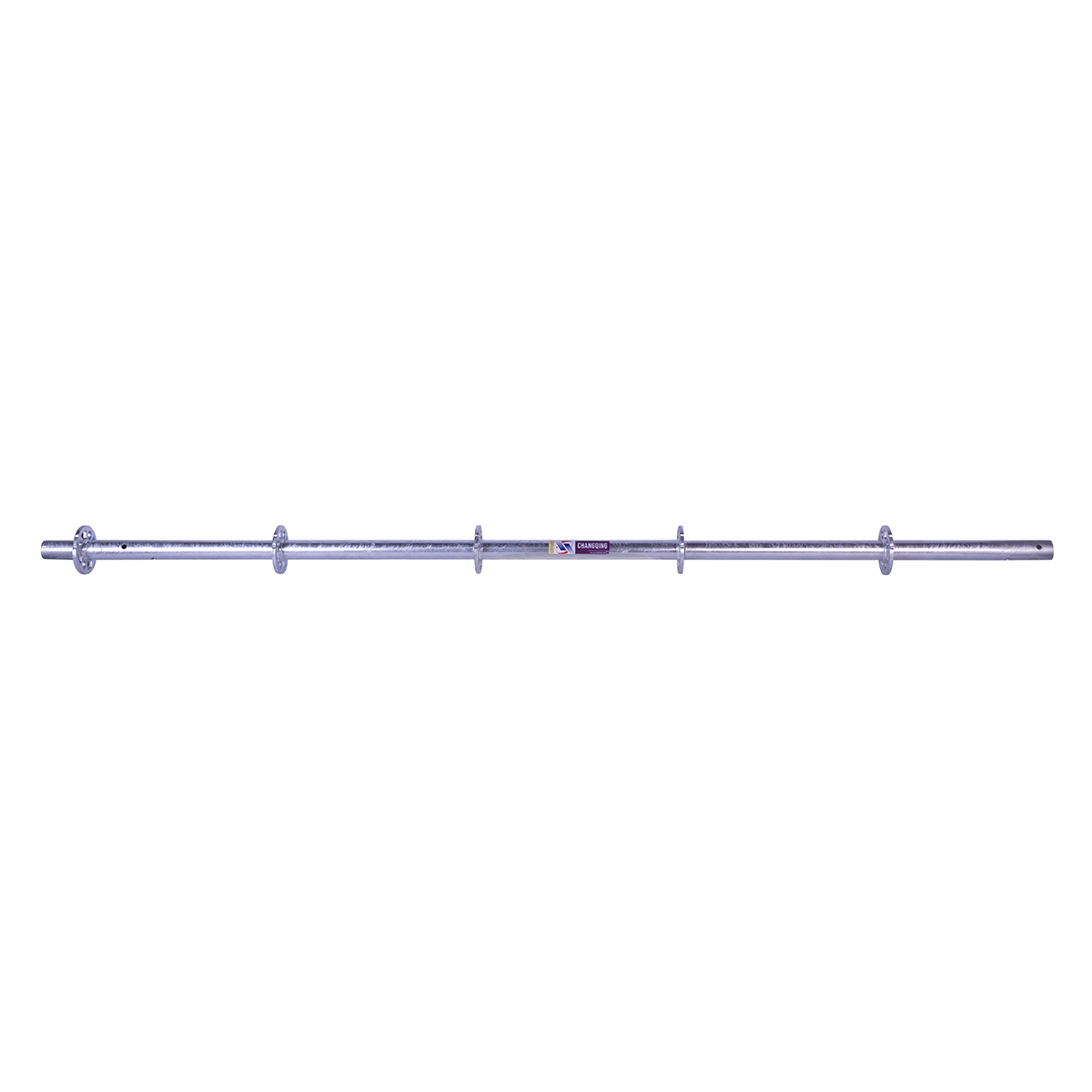
Understanding the precise function and evaluation metrics for each system element ensures better procurement decisions. The structural integrity of the entire framework relies on how these distinct parts interact.
The ringlock standards vertical support acts as the primary load-bearing column. It transfers the entire scaffold weight safely down to the base. Design specifics include heavy-duty welded rosettes spaced exactly 500mm apart along the tube. These multi-directional rosettes allow up to eight independent connections simultaneously. When evaluating these columns, you must inspect the wall thickness carefully. A 3.2mm wall offers adequate support for standard access, while a 4.0mm wall handles heavy-duty industrial shoring. Ensure the manufacturer uses high-yield Q345 or S355 steel. Finally, inspect the spigot integration strength, as this joint dictates vertical stacking stability.
Providing essential horizontal bracing, the ringlock ledgers horizontal support also acts as the structural foundation for working platforms. These tubes feature specially engineered wedge heads at both ends. They create incredibly rigid connections when workers hammer the captive wedges into the standard rosettes. Evaluation metrics here focus heavily on the ledger head casting quality. Cast steel heads generally offer superior deformation resistance compared to cheaper pressed steel alternatives. You should also inspect the wedge pin retention mechanisms and verify strict limits on overall tube straightness.
Spatial stabilization requires the immediate integration of ringlock diagonal braces. They actively prevent dangerous system sway and guarantee ultimate node rigidity. These critical parts utilize swivel wedge heads. This articulated design accommodates various bay lengths and lift heights without inducing structural stress. Procurement teams must rigorously evaluate the swivel pin shear strength. Furthermore, the precision of the machined wedge slot is equally important to avoid sloppy, vibrating connections during dynamic loading.
Ground level load distribution relies entirely on base collars and adjustable base jacks. They handle crucial height leveling on uneven construction terrain. Assess the thread durability closely. Look for deep, self-cleaning Acme threads that resist concrete buildup. Evaluate the base plate dimensions to ensure adequate load spreading. Always verify the manufacturer's safe working load (SWL) limits specifically at the collar and jack interface.
Steel planks, decks, and toe boards create the actual working platforms. They provide mandatory edge protection for site personnel. Evaluate their anti-slip surface profiling, favoring deeply stamped perforations that drain water effectively. Hook strength matters immensely for load transfer. Reliable locking mechanisms, such as integrated O-locks, prevent dangerous wind uplift during severe weather. Always check the maximum allowable deflection limits under heavy point loads.
Selecting a supplier requires looking past glossy brochures and examining the underlying engineering metrics. Procurement managers must focus on metallurgical properties, fabrication techniques, and environmental protections.
High-strength structural steel vastly outshines standard carbon steel in scaffolding applications. The use of high-yield steel directly impacts the weight-to-load ratio. A Q345 steel tube can support significantly more weight than a Q235 tube of the exact same dimensions. This efficiency makes the entire system lighter for workers to handle, accelerating erection times. It simultaneously increases the maximum structural payload. Always request material mill certificates to verify the chemical composition and yield strength of the raw steel batches.
Welding consistency separates elite scaffolding suppliers from average workshops. Automated robotic welding consistently outperforms manual welding. Robotic arms deliver uniform, flawless bead profiles around complex rosette and wedge head connections. This automated precision minimizes the heat-affected zone (HAZ) and prevents micro-cracks from forming. In contrast, inconsistent manual welds often harbor hidden porosity. These microscopic voids create catastrophic stress points under heavy loads.
Corrosion protection demands uncompromising standards. Hot-Dip Galvanization (HDG) serves as the absolute minimum requirement for long-term deployments. You should target a continuous zinc coating thickness between 60 and 80 microns. The hot-dip process submerges the entire component in molten zinc. This ensures the protective layer coats both the exterior surface and the vital interior cavity of the tube. Preventing internal tube rust is critical, as hidden corrosion causes sudden buckling.
Never rely on a supplier's verbal assurances regarding strength. You must expect comprehensive, documented load-bearing charts. Request specific node rigidity testing documentation. This data should detail the maximum bending moment capacity of the rosette connection. Seek out suppliers holding valid third-party certifications from recognized regional bodies. Certifications from institutions like DIBt (Germany) or NASC (UK) provide objective proof of system compliance.
Evaluation Metric | Standard Industry Practice | High-Performance Specification |
|---|---|---|
Structural Steel Grade | Q235 (Yield 235 MPa) | Q345 / S355 (Yield 345+ MPa) |
Welding Methodology | Manual Arc Welding | Automated Robotic MIG/MAG |
Corrosion Resistance | Electro-galvanized (< 30 μm) | Hot-Dip Galvanized (60–80 μm) |
Node Head Fabrication | Pressed Steel Plating | Precision Cast Steel |
Compliance Verification | Internal Factory QA Only | Third-Party (e.g., DIBt, EN 12810) |
Procuring ringlock scaffolding components introduces specific engineering liabilities, especially when managing an existing inventory. Understanding these technical risks prevents catastrophic site failures and legal complications.
Many contractors attempt to mix components from different manufacturers to save money. This practice introduces massive engineering liability. Two parts may appear visually identical to the naked eye. However, combining brand A rosettes with brand B ledger heads creates unpredictable stress distribution. Unverified combinations instantly void manufacturer warranties. If a mixed-system node fails under load, the liability falls entirely on the scaffolding contractor, not the manufacturers.
Machining tolerances dictate structural integrity. "Slop" occurs when manufacturing tolerances remain too loose. This excessive clearance leads to dangerous system sway. Even a one-millimeter gap at the rosette can amplify into fifty millimeters of sway at the top of a tall structure. Conversely, "binding" happens when tolerances are too tight. Workers must use heavy sledgehammers to strike wedges into place. This excessive force bends the rosettes, damages the galvanization, and slows down labor efficiency.
Effective lifecycle management prevents accidents before they occur. You must track component degradation proactively. Know exactly when to retire specific parts from your inventory.
Discard standards immediately if they exhibit deformed spigots or crushed rosettes.
Retire ledgers if they feature hammered-out, permanently warped wedge heads.
Remove any component showing deep surface gouges that expose raw steel to rust.
Implement strict visual inspection protocols before returning components to active yard stock.
Vetting suppliers requires a highly methodical approach. A robust procurement strategy relies on verifiable data, facility inspections, and transparent engineering support.
Begin your vetting process with comprehensive factory audits. Do not rely solely on sales presentations. Verify that the manufacturer operates advanced in-house material testing labs. They should own and regularly calibrate spectrometers and tensile testing machines. This equipment guarantees raw material compliance before fabrication even starts. An authentic supplier tests every incoming steel coil for chemical composition.
Traceability is a non-negotiable safety requirement. Ensure all components feature stamped, permanent batch codes. Manufacturer identification marks must remain clearly visible even after years of use. This strict accountability protects your firm during regulatory safety audits. If a defect occurs, batch codes allow you to isolate and recall a specific run of materials rather than quarantining your entire inventory.
A qualified supplier delivers robust engineering support alongside their physical products. They must provide clear, easy-to-read load data tables. Structural calculation support helps your site engineers plan complex builds efficiently. Look for comprehensive technical manuals comparable to those published by top-tier industry leaders. Strong suppliers also offer digital CAD blocks or Revit families for seamless integration into modern construction software.
Your immediate next-step action involves empirical validation. Never sign bulk purchase agreements blindly. Follow a strict physical verification sequence.
Request random sample components shipped directly to your engineering team.
Conduct physical tolerance testing by assembling nodes to check for slop or binding.
Perform independent metallurgical verification on the samples using a local third-party lab.
Verify the internal galvanization coverage by physically cutting a sample tube open.
Your scaffold investment requires rigorous technical oversight and a long-term strategic vision. Prioritize verifiable high-yield material grades over generic carbon steel alternatives to ensure maximum load capacities. Demand precise manufacturing tolerances from your suppliers to eliminate dangerous node slop and frustrating assembly binding. You must require comprehensive load data and independent third-party certifications before finalizing any procurement contracts. Once the materials arrive, implement strict lifecycle tracking protocols to retire degraded components proactively before they compromise site safety. Ultimately, shift your procurement focus completely. Move away from seeking the lowest initial cost per ton. Instead, aim for the lowest cost per erected cubic meter across a guaranteed, low-maintenance ten-year lifecycle.
A: High-quality load-bearing components require high-yield steel like Q345 or S355. This structural steel provides superior strength-to-weight ratios, preventing bending under heavy loads. Non-structural accessories, such as specific base collars or toe board brackets, often use Q235 carbon steel. Always verify these specific grades through independent raw material mill certificates.
A: You should never mix components from different brands. This practice introduces severe engineering liability. Even microscopic tolerance mismatches between a standard rosette and a ledger wedge head can cause node failure. Unverified combinations automatically void manufacturer warranties, compromise site safety, and violate strict structural engineering guidelines.
A: Diagonal braces eliminate dangerous lateral deflection within the scaffold framework. By locking the vertical and horizontal members together dynamically, they create incredibly rigid structural nodes. This spatial stabilization prevents sway and ensures the vertical standards can support their maximum designed axial load without buckling outward.
A: A high-quality, well-maintained system easily lasts 10 to 15 years. Lifespan directly correlates with the galvanization thickness, strictly required at 60 to 80 microns. Harsh environmental exposure, like saltwater facilities or chemical plants, accelerates wear. Regular cleaning, gentle dismantling, and proper storage extend component longevity significantly.


