
Views: 126 Author: Site Editor Publish Time: 2026-07-07 Origin: Site


Procuring modular scaffolding demands high-stakes decision-making. Your chosen system directly dictates labor efficiency, daily freight costs, and long-term project safety. We often see contractors struggle when evaluating ringlock vs kwikstage scaffolding. Both represent heavy-duty, modular solutions. They heavily outperform traditional tube-and-fitting setups. However, they serve fundamentally different operational niches. Making the wrong choice leads to inflated labor hours or unnecessary capital expenditure.
This article provides a transparent, technical, and commercial comparison. We break down structural mechanics, ideal applications, and erection speeds. You will gain actionable insights to help finalize your procurement strategy. Let us remove the guesswork from your next equipment investment. You need hardware working hard for you, not against you. Whether you manage straight commercial facades or complex industrial rigs, you will learn exactly which system aligns best with your specific site requirements.
Geometry requirements dictate the choice: Ringlock’s 8-way rosette excels in complex, multi-directional industrial projects, while Kwikstage is optimized for rapid deployment on straight facades.
Component management: Kwikstage features captive wedges (no loose parts), reducing lost-item costs, whereas the ringlock scaffolding system offers superior node rigidity.
Upfront vs. Lifecycle Cost: Ringlock typically requires a higher initial capital investment but offers greater structural versatility; Kwikstage provides faster ROI for standardized residential and commercial builds.
Material longevity: Both systems demand high-grade surface treatments; specifying a kwikstage galvanized standard ensures parity in lifecycle durability with heavily galvanized Ringlock systems.
We must first examine how each framework handles structural loads. Node design determines overall rigidity and erection flexibility on your job site.
The central engineering feature here is the circular rosette. Manufacturers weld this component directly onto the vertical standards at 500mm intervals. Each rosette features exactly eight punched holes. Four smaller holes allow for perfect right-angle connections. Four larger holes accommodate diagonal bracing at variable angles.
This design creates a highly rigid, moment-resisting joint. Ledger heads slide seamlessly into the rosette. Scaffolders then drive a captive wedge down to secure the joint. The resulting connection transfers heavy loads efficiently across the entire structure. A high-quality ringlock scaffolding system minimizes sway. It provides incredible confidence during high-altitude operations.
Kwikstage takes a completely different structural approach. Instead of circular rosettes, it utilizes V-shaped pressings. Factories weld these pressings at 500mm intervals along the vertical standard.
Transoms and ledgers rely on captive C-shaped wedges. Workers simply drop these wedges into the waiting V-pressings. Gravity and a quick hammer strike lock them firmly into position.
How do these two approaches compare structurally? We evaluate them through their primary connection points:
Concentric Flexibility: Ringlock offers an 8-point concentric connection. You can build out in almost any direction from a single standard.
Directional Rigidity: Kwikstage offers a 4-point directional connection. It strictly enforces 90-degree square grids.
Let us summarize these mechanical differences clearly below.
Table: Node Mechanics Comparison
Mechanical Feature | Ringlock Scaffolding | Kwikstage Scaffolding |
|---|---|---|
Node Type | 8-way Circular Rosette | 4-way V-Pressing |
Connection Style | Ledger head and captive wedge | C-shaped drop-in wedge |
Angle Variability | Variable (360-degree capability) | Fixed (90-degree grid) |
Primary Strength | Moment-resisting rigidity | Rapid, fixed-angle alignment |
Your building geometry should dictate your final equipment choice. Selecting the wrong structural format leads to massive labor delays.
Engineers favor Ringlock for highly demanding environments. You will frequently see it on industrial sites and offshore rigs. It also dominates complex temporary works and circular structures.
Why does it excel here? The 360-degree angle variability provides unmatched freedom. You can easily navigate around pipes, curved tanks, or irregular building facades. Non-linear architecture demands adaptive support structures. Ringlock adapts smoothly without compromising overall load capacity.
Here are specific scenarios requiring this versatility:
Industrial Refineries: Weaving safe access platforms through dense, unpredictable pipework.
Shipbuilding and Repair: Contouring safety access around massive curved hulls.
Historic Restorations: Supporting delicate, irregular masonry safely.
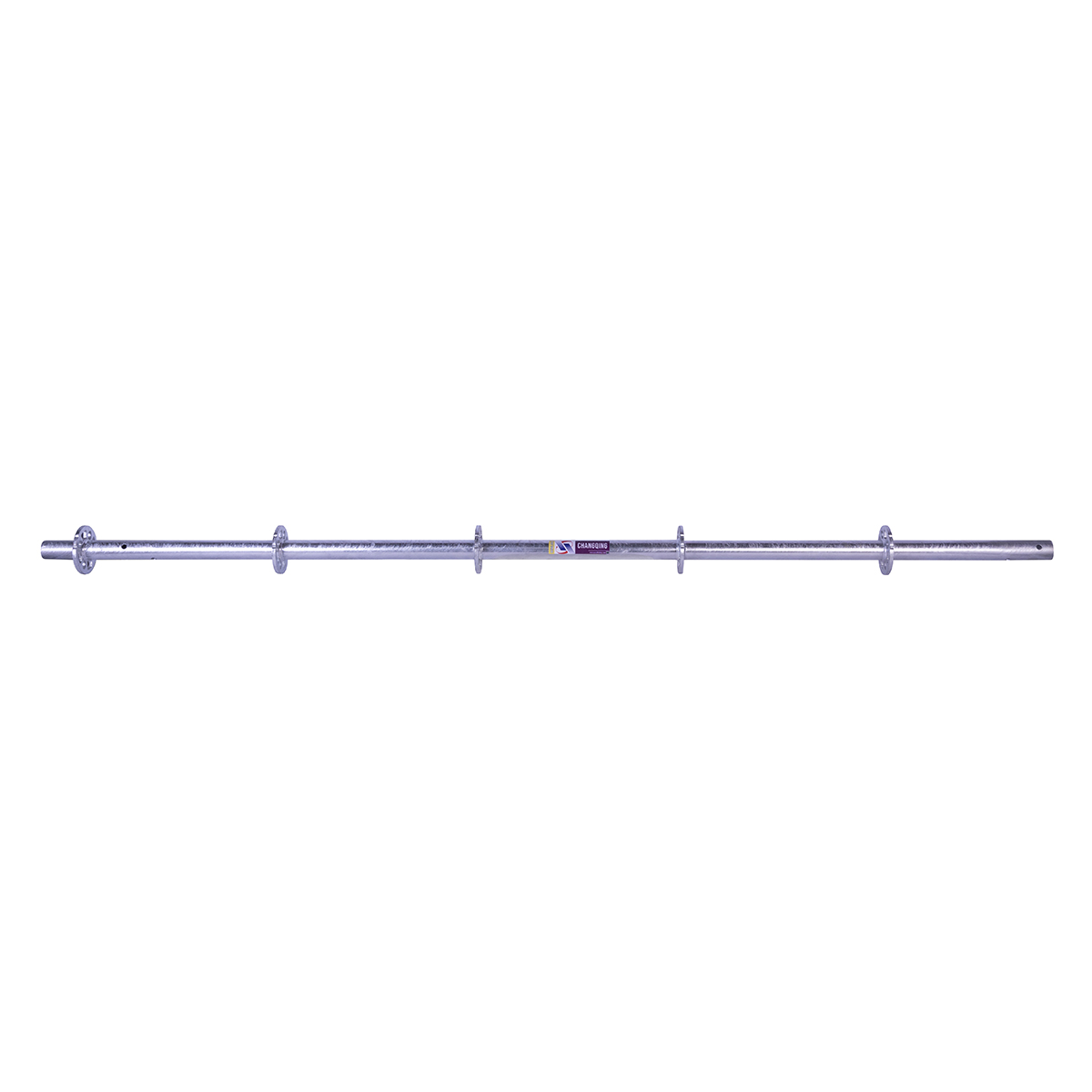
Kwikstage thrives in completely different environments. It performs best on straight residential builds. You also see it extensively on long commercial facades and standard blockwork.
Its fixed 90-degree alignment acts as a built-in speed multiplier. Workers do not need to measure angles constantly. The system forces a perfectly square erection every single time. When complex angles remain unnecessary, this rigidity significantly speeds up daily progress.
Contractors often make one critical mistake. They force Kwikstage onto complex geometries to save upfront rental costs. Doing this requires excessive supplementary tube-and-fitting work. You must bridge gaps manually whenever the strict 90-degree grid fails to fit the building face. This manual bridging completely negates the initial speed advantage. Labor costs will quickly spiral out of control.
Labor remains the highest variable cost on any job site. Choosing the correct system directly impacts daily productivity.
We must analyze the weight-to-strength ratio of both options. Ringlock typically utilizes higher-yield steel grades. This material choice makes individual components slightly lighter. Scaffolders can handle these lighter parts continuously and experience less physical fatigue.
Conversely, Kwikstage boasts a massive "no loose fittings" advantage. The captive wedges remain permanently attached to ledgers and transoms. Workers spend zero time looking for dropped pins or lost couplers. They just pick up the component, drop it in, and lock it. This specific feature eliminates frustrating work stoppages.
Both systems offer highly intuitive assembly processes. However, learning curves differ slightly across crews.
Kwikstage relies on a rigid grid format. This predictability often requires slightly less specialized training for basic facade assembly. Novice scaffolders learn the straightforward drop-and-lock rhythm very quickly.
Ringlock demands much stricter initial precision. You must focus heavily on the "base out" phase. Follow these critical leveling steps:
Establish a perfectly level foundation using adjustable base jacks.
Connect the first level of ledgers loosely.
Square the entire base using precise diagonal measurements.
Lock the wedges firmly only after verifying perfect level.
If you rush this initial base out, structural errors multiply upward rapidly. You must ensure perfect alignment early so the multi-directional structure aligns properly at higher elevations.
Equipment longevity protects your initial capital outlay. Proper material treatments dictate how long components survive active field duty.
Hot-dip galvanization represents the industry gold standard. It actively prevents internal tube corrosion. Paint alone simply cannot protect steel against internal moisture buildup. You must ensure suppliers galvanize parts inside and out.
When auditing suppliers, specify a kwikstage galvanized standard to guarantee parity against heavily protected alternatives. Always verify the actual zinc coating thickness. You want a minimum of 80 microns. This robust thickness ensures the steel survives harsh coastal or highly corrosive industrial environments safely.
Field damage happens on every busy site. How you manage this damage impacts long-term profitability.
Compare these node damage scenarios carefully:
Rosette Damage: Heavy impacts occasionally bend Ringlock rosettes. This damage occurs rarely because the rosette plate is quite thick. However, field repair proves extremely difficult. You usually have to scrap the damaged standard completely.
V-Pressing Damage: Kwikstage V-pressings bend more easily under severe forklift impacts. Fortunately, you can identify this damage quickly. Skilled yard technicians can sometimes reshape or repair minor V-pressing bends safely.
Consider your storage footprint and daily yard management. Kwikstage components often stack slightly bulkier. The welded V-pressings protrude further from the main tube body. Your exact storage density depends heavily on the specific palletizing system.
Chart: Lifecycle & Maintenance Summary
Attribute | Ringlock System | Kwikstage System |
|---|---|---|
Coating Requirement | Hot-dip galvanized | Hot-dip galvanized |
Node Damage Frequency | Low | Moderate |
Node Repairability | Difficult | Moderate |
Storage Footprint | Compact stacking | Slightly bulkier stacking |
Choosing the right structural design covers only half the battle. You must secure a reliable production partner.
Beyond your structural choice, the reliability of your chosen scaffolding system manufacturer dictates ultimate project success. Poor manufacturing leads to brittle welds and fatal site failures.
Audit every potential supplier using these strict criteria:
Request valid ISO 9001 quality management certifications immediately.
Demand proof of robotic welding consistency. Hand-welded nodes often hide dangerous micro-cracks.
Verify third-party load testing documentation. Ensure full compliance with EN 12810 and EN 12811 European standards.
A strong manufacturer acts as an active project partner. Assess their actual inventory depth before signing any purchase orders. Can they supply emergency top-ups mid-project? Construction scopes frequently expand without warning. You need a supplier who ships extra tonnage immediately.
Furthermore, verify cross-compatibility rigorously. Many contractors try integrating new stock alongside an existing fleet. Ensure the manufacturer guarantees extremely tight tolerance matches. Minor dimensional deviations cause dangerous structural binding during assembly.
Decision time requires absolute clarity. Choose Kwikstage for rapid, linear facade work. It dramatically minimizes lost parts and speeds up straight-line deployment. Choose Ringlock for high-load, complex, or multi-directional engineering projects. Its versatility handles unpredictable architecture flawlessly.
Your exact project blueprint holds the final answer. Do not guess on structural capacities. Take these immediate next steps:
Audit your upcoming project pipeline for geometric complexity.
Request a detailed load-calculation consultation from certified engineers.
Obtain a comparative quote based directly on your current site blueprints.
A: Never intermingle parts from different modular systems. They feature completely mismatched load transfer mechanisms and incompatible node connections. Mixing them creates unpredictable structural weaknesses and explicitly violates safety regulations. Always use one dedicated system per continuous structural bay to ensure worker safety.
A: Kwikstage often offers a lower initial purchase price, making it attractive for tight budgets. However, Ringlock's superior versatility usually yields a better long-term return on investment. If you frequently bid on diverse, complex, or industrial project types, the 360-degree adaptability justifies the higher initial capital expense.
A: Yes, manufacturers produce aluminum Ringlock for weight-sensitive applications. Contractors deploy these lightweight versions for suspended scaffolds or delicate roof access. Kwikstage, conversely, relies almost exclusively on steel production to maintain its rugged, high-impact durability for heavy masonry environments.


