
Views: 0 Author: Site Editor Publish Time: 2026-09-16 Origin: Site


A modular scaffold stands or falls based on its primary junctions. The node where horizontal and diagonal members lock into the vertical post carries the entire structural load. Substandard manufacturing, poor material grades, imprecise tolerances, or weak welds in the wedge mechanism lead directly to joint instability. These defects cause accelerated wear, compliance failures, and severe on-site safety hazards. Procurement teams, safety directors, and site engineers must rigorously evaluate the mechanical properties of these nodes. You must verify dimensional accuracy and manufacturing standards before committing to a large-scale investment. Understanding the mechanics of a ringlock wedge connection ensures your workforce remains safe at height. Evaluating these components correctly prevents catastrophic failures and keeps complex construction projects on schedule.
The reliability of a ringlock wedge connection dictates the overall load-bearing capacity, rigidity, and safety of the entire temporary structure.
Material selection (typically high-strength galvanized steel) and the manufacturing process (drop-forged vs. cast) directly impact the shear strength and longevity of the wedge.
Strict dimensional tolerances and engineered taper angles are non-negotiable; loose wedges cause structural sway, while overly tight tolerances or zinc pooling impede efficient assembly and dismantling.
Vetting a ringlock scaffolding manufacturer requires auditing their batch traceability, robotic welding standards, third-party load testing certifications, and quality control frameworks.
The connection node serves as the core of the scaffold structure. It consists of three primary components. First is the rosette, a circular steel plate welded at 500mm intervals along the vertical post. Second is the wedge head, a slotted steel casting or forging welded to the ends of horizontal and diagonal tubes. Third is the captive wedge pin itself. This pin slides through the wedge head and drops into the rosette. When a scaffolder strikes the pin with a hammer, it wedges tightly against the rosette and the vertical tube. This action creates a rigid joint capable of transferring heavy loads safely down to the base jacks.
The rosette is permanently welded to the ringlock standard. Each rosette features eight distinct holes. Four small holes allow for right-angle connections. Four larger holes accommodate varied angles for diagonal bracing. The wedge pin passes through the upper slot of the wedge head, drops through a selected rosette hole, and exits through the lower slot of the wedge head. This multi-point contact eliminates rotational movement. It creates a load-bearing, right-angle joint. The precision of this fit determines the overall stability of the scaffold tower. If the gap between the pin and the rosette exceeds acceptable limits, the entire tower will experience dangerous sway.
Different components utilize the rosette in specific ways to build a stable matrix. A ringlock ledger connects to the smaller rosette holes. This ensures precise 90-degree alignment for horizontal support. Ledgers act as guardrails and bear the weight of scaffolding planks. Conversely, a ringlock diagonal brace connects to the larger rosette holes. These larger holes allow the brace to pivot slightly, accommodating different ledger lengths and lift heights. Diagonal braces provide essential lateral stability. They prevent the entire structure from racking or twisting under dynamic loads like wind or heavy machinery operation.
The assembly sequence relies heavily on these connections functioning smoothly. Scaffolders follow a specific process to erect a stable bay:
Position the base collars and level the starting jacks on solid ground.
Insert the vertical standards into the base collars.
Connect the base ledgers to the lowest rosettes to square the initial footprint.
Strike the wedge pins with a scaffolding hammer to lock the base in place.
Install the diagonal braces across the face of the bay to establish lateral rigidity.
Add subsequent lifts by repeating the ledger and brace installation at higher rosettes.
High-altitude construction presents severe dropped-object hazards. To mitigate this, engineers designed the wedge pin as a captive component. A steel rivet sits near the bottom of the wedge pin. This rivet prevents the pin from sliding completely out of the wedge head during transit, assembly, or dismantling. Workers never have to carry loose pins in their tool belts. This simple mechanical feature prevents component loss. It streamlines inventory management and drastically improves safety for personnel working below the scaffold erection zone. A missing rivet requires immediate component quarantine.
A successful connection must meet strict operational criteria. It must provide immediate self-squaring capabilities. When workers drop the ledgers into place, the scaffold should naturally align into perfect 90-degree angles without forced adjustments. The connection must resist vibrational loosening. The taper angle of the wedge must create an optimal friction-lock. This lock must hold fast even when site machinery causes constant ground vibrations. Finally, the node must transfer loads efficiently down the standard without causing deformation to the rosette or the wedge head. Any visible bending in the rosette indicates a failed connection or an overloaded bay.
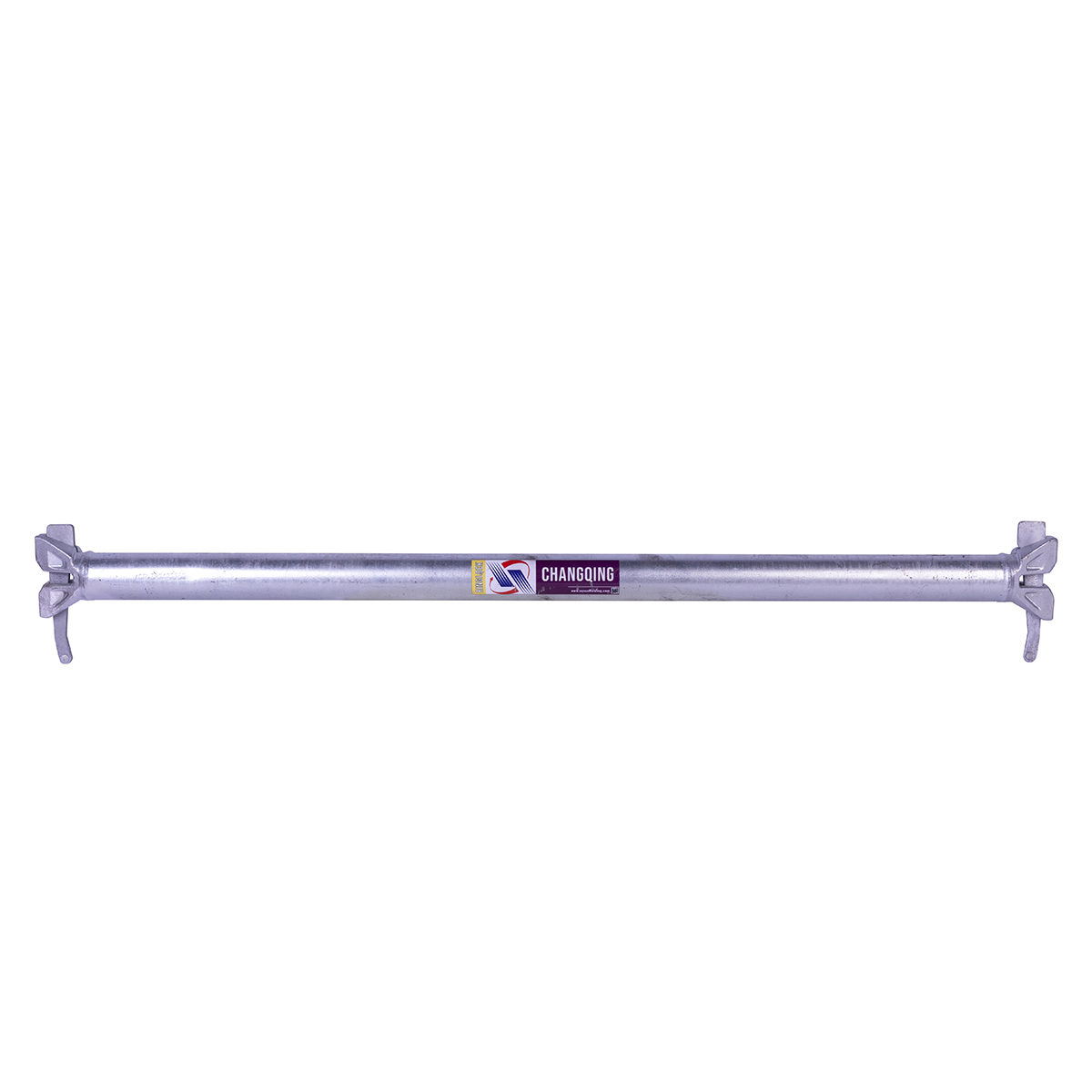
Material quality dictates the absolute failure point of any structural node. Industry-standard wedge pins require high-tensile steel grades. Manufacturers typically use Q235 or Q345 steel, or their regional equivalents like S235 or S355. Q345 offers a higher yield strength, making it superior for heavy-duty load-bearing nodes. Using inferior steel leads to pin shearing under heavy vertical loads. The wedge taper angle is also an engineered feature. Engineers design this angle specifically to provide a friction-lock. This lock resists dynamic loads and vibrational loosening from wind or heavy equipment.
Corrosion resistance is equally important for long-term structural integrity. Buyers must insist on hot-dip galvanization (HDG) for all components. The galvanization process must adhere to strict international standards like ASTM A123 or EN ISO 1461. The zinc coating thickness directly affects the smooth operation of the wedge over time. A standard thickness of 70 to 85 microns provides excellent rust protection. However, excessive zinc buildup can clog the wedge slots. Manufacturers must carefully manage the HDG process to ensure smooth mechanical operation.
Steel Grade | Yield Strength (MPa) | Tensile Strength (MPa) | Primary Application in Scaffolding |
|---|---|---|---|
Q235 (S235) | 235 | 370 - 500 | Standard ledgers, light-duty bracing, and non-load-bearing accessories. |
Q345 (S355) | 345 | 470 - 630 | Vertical standards, heavy-duty wedge pins, and high-stress rosettes. |
The method used to shape the wedge head significantly impacts its durability. Buyers generally choose between drop-forged and cast components. Drop-forging involves hammering heated steel into a die. This process aligns the metal grain structure with the shape of the part. It provides superior impact resistance and fatigue longevity. Forged wedge heads withstand the repeated hammer blows required during assembly and dismantling. They rarely crack or shatter under stress. Site crews can work faster knowing the components will not fail under heavy strikes.
Cast wedge heads are created by pouring molten steel into a mold. While casting is cheaper, it introduces severe structural risks. Low-quality casting methods often result in porosity and internal voids. These microscopic air pockets weaken the steel. Cast components are particularly vulnerable to brittle failures in freezing temperatures. A single hammer blow on a cold winter morning can shatter a poorly cast wedge head, bringing work to an immediate halt and requiring immediate replacement.
Evaluation Metric | Drop-Forged Wedge Heads | Cast Wedge Heads |
|---|---|---|
Grain Structure | Aligned with component shape for maximum strength. | Randomized, leading to potential weak points. |
Impact Resistance | Excellent. Withstands repeated heavy hammer blows. | Moderate to Poor. Prone to cracking under heavy impact. |
Cold Weather Performance | Maintains ductility and strength in freezing conditions. | High risk of brittle fracture at sub-zero temperatures. |
Porosity Risk | Zero risk of internal air voids. | High risk if quality control is inadequate. |
The weld joining the wedge head to the tubular body of the ledger or brace is a high-stress point. If this weld fails, the horizontal support detaches completely, leading to potential deck collapse. Buyers must evaluate the welding processes used by the manufacturer. Manual welding introduces human error, leading to inconsistent penetration, undercut, or excessive spatter. These defects weaken the joint and invite localized corrosion where the zinc coating fails to adhere properly.
You should look for robotic welding processes. Automated welding guarantees consistent penetration and absolute uniformity across thousands of components. Ask manufacturers to verify their welding standards. They should comply with rigorous codes like AWS D1.1 or EN ISO 3834. Proper robotic welding ensures the joint can handle maximum shear and bending forces without cracking. Inspectors look for a smooth bead profile and complete fusion between the cast or forged head and the high-tensile tube.
Machining tolerances define how well the components fit together on site. The wedge must slide smoothly into the rosette. It must then lock tightly with a single hammer blow. If the gap between the wedge head and the rosette is too large, the node will experience micro-movements. These micro-movements compound across a large scaffold tower, causing dangerous structural sway. A swaying tower reduces worker confidence and decreases productivity.
Manufacturers must balance tight machining with HDG clearance. During the galvanization process, liquid zinc can pool in the wedge head slots. If the manufacturer does not clear this zinc pooling, the wedge pin will jam. Poor tolerances increase labor costs drastically. Workers waste time forcing stuck wedges into place or struggling to dismantle jammed nodes. Precise dimensional control ensures rapid assembly and uncompromised safety. Quality control teams must use Go/No-Go gauges on the factory floor to verify these slot dimensions before shipping.
You cannot rely on visual inspections alone to verify load capacity. Buyers must request specific mechanical tests for the wedge connection. Vertical shear tests measure the maximum downward force the node can handle before the pin or rosette fails. In a laboratory setting, hydraulic presses apply downward force on the ledger until the connection yields. Horizontal slip tests evaluate the friction-lock of the wedge. They determine how much lateral force is required to dislodge the connection. Bending moment capacity tests measure the node's resistance to rotational forces.
These node-level metrics translate directly to the safe working load of the entire ringlock scaffolding system. High shear strength means the scaffold can support heavier materials and more workers. High bending moment capacity means the structure remains rigid under lateral wind loads. Dynamic load testing is also necessary. It simulates real-world conditions like wind uplift and continuous construction vibrations, ensuring the wedge maintains its friction-lock over time.
Reputable manufacturers design their components to meet strict international standards. In Europe, EN 12810 and EN 12811 govern modular scaffolding performance. In the United States, OSHA and ANSI outline safety factors and load requirements. In Australia and New Zealand, AS/NZS 1576 dictates testing and compliance. These standards require rigorous laboratory testing to verify structural integrity. Compliance ensures the equipment meets the legal safety requirements of your local jurisdiction.
Instruct your procurement teams to demand unredacted, third-party laboratory test reports. Do not rely on internal manufacturer claims or marketing brochures. Independent testing facilities provide objective data on yield strength, shear capacity, and galvanization thickness. Verifying these certifications protects your project from compliance failures and legal liabilities. Keep these documents on file for site safety audits and client reviews.
Most construction projects utilize off-the-shelf standardized components. Standardized ledgers and braces offer excellent versatility for general masonry, painting, and facade work. However, specialized industrial applications often require different solutions. Offshore oil rigs, aviation maintenance facilities, and complex boiler access projects present unique geometric challenges. In these scenarios, buyers may need to commission custom ringlock scaffolding.
Custom solutions might involve modified wedge head angles or specialized rosette spacing. While custom parts solve specific access problems, they introduce compatibility challenges. You must evaluate how custom wedge heads impact overall system engineering approvals. Mixing custom parts with standard inventory requires careful management. Ensure replacement parts remain readily available to prevent project delays during maintenance turnarounds. Always label custom components clearly in your storage yard.
Procurement teams often face pressure to select the lowest bidder. However, purchasing cheaper, lower-grade connections results in severe long-term financial penalties. Low-quality steel and poor galvanization lead to rapid corrosion. Cast wedge heads crack under normal site use. Imprecise tolerances cause wedges to jam, drastically slowing down erection and dismantling times. The initial purchase price is only a fraction of the equipment's financial impact.
Contrast these upfront savings with the realities of site maintenance. Frequent component replacement devours your equipment budget. Maintenance downtime delays critical path construction activities. Labor inefficiencies caused by struggling with poorly fitting parts inflate payroll expenses. Investing in high-quality, forged, robotically welded connections ensures a lifespan of decades, not just a few seasons. Quality connections maximize operational uptime and protect your workforce from unnecessary hazards.
A reliable ringlock scaffolding manufacturer operates a robust Quality Assurance system. This system must begin with raw material chemical analysis. The factory must verify the exact carbon and manganese content of the steel before production begins. During production, QA teams must perform automated welding consistency checks. They should use Go/No-Go gauges to conduct dimensional spot-checks on the assembly line, ensuring every wedge head meets tolerance specifications.
Batch traceability is non-negotiable for high-risk structural components. Manufacturers must permanently stamp batch numbers on wedge heads and ledgers. In the rare event of a component failure, batch stamping allows safety engineers to trace the part back to its specific production date, steel heat number, and welding shift. This accountability is vital for isolating defective batches and maintaining site safety. Without batch stamps, you cannot effectively manage a product recall or safety alert.
Mega-projects require thousands of tons of scaffolding delivered in strict phases. You must evaluate the manufacturer's capacity to deliver consistent quality at scale. A factory that produces excellent samples might struggle to maintain tolerances during a massive production run. Audit their production capacity, inventory levels, and logistics network to ensure they can meet your project milestones without substituting lower-grade materials to meet deadlines.
Post-sale technical support separates premium manufacturers from basic steel fabricators. Your supplier should provide comprehensive load calculation software data. They must offer structural engineering support to help your team design complex scaffold towers safely. Request assembly manuals specific to their engineered connections. Strong technical support ensures your site teams utilize the equipment exactly as designed, maximizing both safety and efficiency.
Request physical samples from shortlisted suppliers to conduct your own tolerance and hammer-blow testing on site.
Audit the manufacturer's ISO certifications and request unredacted third-party laboratory test reports for shear and bending moments.
Consult with your structural engineers to define specific load requirements before issuing a purchase order for any modular system.
Verify the presence of permanent batch stamping on all load-bearing components to ensure long-term traceability and accountability.
A: It locks horizontal ledgers and diagonal braces to the vertical standard. The wedge pin drops through the wedge head and slots into the rosette. This creates a rigid, self-squaring node that prevents rotational movement and transfers heavy structural loads safely to the ground.
A: Perform visual checks before every assembly. Look for bent wedge pins, deformed or cracked wedge heads, and compromised welds. Ensure the captive rivet is intact at the bottom of the pin. Check for severe rust or flaking galvanization that might weaken the steel.
A: Mixing components introduces severe safety and liability risks. Minute differences in wedge taper angles, rosette thicknesses, and machining tolerances can prevent the node from locking correctly. This mismatch reduces load capacity and causes dangerous structural sway.
A: Capacity varies based on ledger length, steel grade, and weld quality. Under standard EN 12811 testing, a high-quality connection can typically handle vertical shear loads between 30 kN and 40 kN. Always consult the manufacturer's specific engineering data for accurate safe working loads.
A: Wedges jam due to several factors. Physical deformation from overloading the scaffold is a primary cause. Zinc pooling inside the wedge head slots from poor galvanization also causes sticking. Additionally, heavy corrosion or poor initial manufacturing tolerances prevent the pin from sliding smoothly.
A: Yes. Drop-forging aligns the metal grain structure, providing superior impact resistance and fatigue longevity. Forged heads withstand repeated hammer blows and perform reliably in freezing temperatures. Cast heads are prone to internal voids, porosity, and brittle fractures under heavy impact.
A: The rivet creates a captive pin mechanism. It prevents the wedge pin from fully detaching and falling out of the wedge head. This design eliminates dropped object hazards for workers below and prevents lost inventory during transit and site assembly.


