
Views: 0 Author: Site Editor Publish Time: 2026-09-29 Origin: Site


Structural failures in commercial and industrial construction often stem from invisible material deficiencies rather than visible assembly errors. Procurement teams and project engineers evaluate various scaffolding systems for major projects, facing constant pressure to optimize budgets. However, visual inspections cannot verify structural integrity. This leaves projects vulnerable to buckling, deformation, and catastrophic failure if the underlying steel quality is compromised. Understanding and verifying the ringlock scaffolding steel grade is the most important step in procurement. The chosen alloy determines how the system handles dead loads, live loads, and environmental stress. Specific steel grades dictate load capacity, environmental resilience, and compliance. Evaluating material specifications ensures site safety and structural reliability before the first component arrives on site.
The structural integrity of a ringlock system relies heavily on the yield strength of its steel; upgrading from standard carbon steel to high-strength alloys significantly increases load-bearing capacity and impact resistance.
Q355B ringlock scaffolding (yielding at ~345 MPa) is the industry benchmark for heavy-duty applications, offering superior resistance to bending and buckling compared to lower-grade alternatives like Q235.
Component-specific material selection matters: the ringlock standard requires higher compressive strength and optimized rosette thickness, while the ringlock ledger demands high tensile and shear strength.
A system is only as strong as its weakest link; auxiliary components like couplers and pins must match the structural grade of the main system, especially for long-term projects or extreme weather exposure.
Rigorous scaffolding quality testing and verifiable Mill Test Certificates (MTCs) are non-negotiable when vetting a ringlock scaffolding manufacturer.
Scaffolding systems endure immense physical demands on active construction sites. They must support dead loads, including the weight of the steel components, work planks, and toe boards. They also support dynamic live loads. These include workers moving across the deck, stacked concrete blocks, and heavy masonry equipment. Environmental stressors add another layer of complexity. High winds create lateral shear forces on sheeted scaffolds, acting like a sail and transferring massive stress to the nodes. Seismic activity introduces unpredictable vibrations. Extreme temperatures affect material ductility. The steel grade determines how the scaffolding responds to these combined forces.
Engineers evaluate scaffolding safety using two primary metallurgical metrics. Yield strength is the most critical factor. It marks the exact point where steel undergoes permanent plastic deformation. Once steel passes its yield point, it will not return to its original shape. A compromised component immediately weakens the entire node structure, shifting the load to adjacent members and risking a progressive collapse. Tensile strength measures the maximum stress the steel can handle before fracturing completely. While tensile strength prevents catastrophic snapping, yield strength prevents the structural warping that leads to failure.
Higher-grade steel maintains structural geometry under heavy axial loads. Vertical components bear the brunt of gravity. When a heavy load pushes down, the steel must resist bending outward. This outward bending is called buckling. High-strength steel alloys provide a higher threshold against buckling by improving the slenderness ratio capabilities of the tube. They allow engineers to achieve higher weight-to-strength ratios. You can maintain high load capacities without increasing the tube wall thickness excessively. This keeps the scaffolding manageable for manual assembly. Heavy tubes slow down erection times and increase worker fatigue.
Impact resistance is another physical property dictated by steel grade. Construction sites are chaotic environments. Scaffolding components suffer accidental drops during transport and assembly. Blunt force impacts from heavy machinery or swinging crane loads are common. High-grade steel absorbs these impacts without denting or cracking. Steel chemistry also prevents cold-weather embrittlement. Standard carbon steel becomes brittle in freezing temperatures. Specific alloys maintain their impact resistance even in sub-zero winter conditions. This prevents sudden shattering under load when the temperature drops, a critical factor for projects in northern climates.
Global scaffolding manufacturing relies on a few standardized steel grades. Understanding these categories helps project engineers make informed material selections. The most common divide in the industry is between standard carbon steel and high-strength low-alloy steel. Each grade serves a specific operational purpose based on its chemical composition and mechanical limits.
Q235 steel features a yield strength of approximately 235 MPa. It is a standard carbon steel widely used in general construction. Q235 is highly ductile and easy to weld. It works well for light-duty, low-height applications. Residential exterior painting or simple facade work often utilizes Q235 systems. However, it poses significant risks in industrial settings. Its lower deformation threshold makes it unsuitable for heavy shoring or high-rise support. Under extreme axial loads, Q235 tubes are prone to buckling. The carbon content is usually capped around 0.22%, making it cheap to produce but limited in structural capacity.
Q355B steel is the standard for industrial applications. It offers a yield strength of approximately 345 to 355 MPa. This extra 110+ MPa translates to massive real-world advantages. Q355B ringlock scaffolding handles significantly higher load capacities, easily meeting Class 4, Class 5, and Class 6 load requirements under EN 12811 standards. It provides superior structural stability for high-rise construction, bridge shoring, and heavy industrial maintenance. The "B" designation indicates that the steel passes impact testing at 20 degrees Celsius. This ensures reliable performance in standard outdoor environments. The addition of manganese (up to 1.70%) increases the strength without compromising weldability.
Navigating global procurement requires understanding international steel equivalents. Chinese standards (GB) map closely to European (EN) and American (ASTM) standards. Recognizing these equivalents ensures compliance with local engineering regulations and allows procurement teams to accurately compare technical bids from international suppliers.
Chinese Standard (GB) | European Equivalent (EN) | American Equivalent (ASTM) | Yield Strength (MPa) | Primary Scaffolding Application |
|---|---|---|---|---|
Q235 | S235JR | A36 | ≥ 235 | Light-duty facade access, low-height residential work. |
Q345 / Q355B | S355JR | A572 Gr.50 | ≥ 345 | Heavy-duty shoring, industrial maintenance, high-rise support. |
Q420 | S420MC | A572 Gr.60 | ≥ 420 | Specialized extreme-load infrastructure projects. |
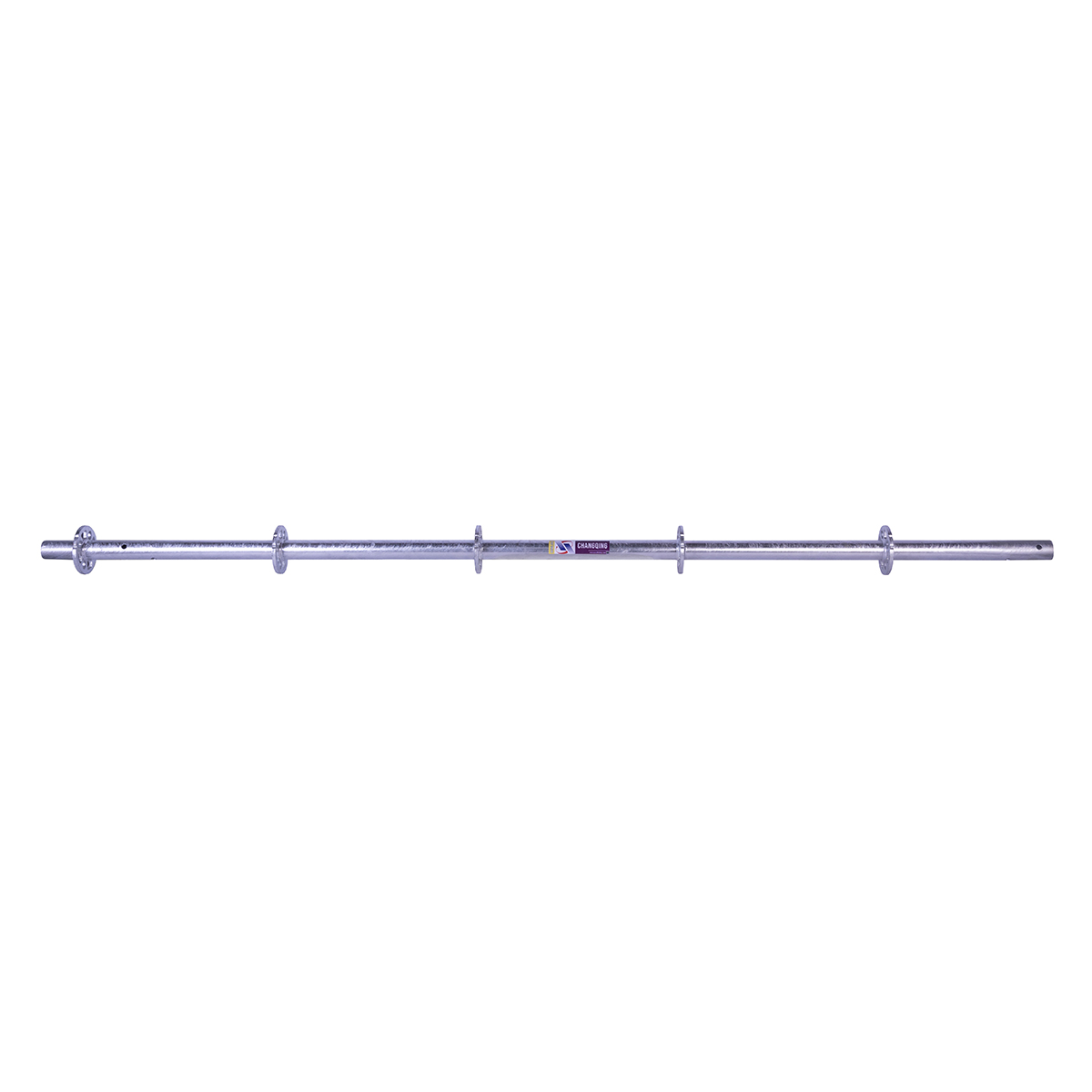
A ringlock system operates as an interconnected structural grid. The steel grade affects individual system components differently based on the specific forces they encounter. Evaluating these components individually reveals why material consistency is vital across the entire assembly.
The ringlock standard acts as the vertical backbone of the structure. It absorbs immense compressive forces from the levels above. Gravity pushes the load straight down the tube. Q355B steel is necessary here to prevent buckling under multi-level structural loads. The standard also houses the rosettes. These circular connection nodes are welded along the tube at regular intervals, typically every 500mm. The steel grade dictates the allowable rosette thickness. High-strength steel allows for optimized rosette profiles without sacrificing node shear capacity. It also ensures the rosette welding integrity remains intact under stress, preventing the node from tearing away from the vertical tube.
The ringlock ledger provides horizontal support. It faces entirely different physical demands. Ledgers endure severe bending moments and shear forces. When workers walk across planks or place heavy materials on the deck, the ledger wants to bow downward. High-grade steel prevents ledger deflection under these heavy live loads. Diagonal braces also rely on high tensile strength. They keep the entire grid square and resist lateral wind forces. If a diagonal brace stretches or deforms, the scaffolding loses its rigidity and becomes susceptible to sway.
Accessories and connection points must match the main system grade. Couplers, wedge pins, and base collars handle concentrated stress. A system is only as strong as its weakest link. Using pressed steel couplers on a high-strength vertical standard creates a dangerous vulnerability. Forged steel accessories matching the Q355B yield strength prevent weak links. This is particularly important in long-term deployments where continuous micro-vibrations fatigue lower-grade metals. Base jacks with threaded stems require high yield strength to prevent the threads from stripping under heavy axial loads, ensuring the load transfers safely to the ground.
Heavy-duty ringlock scaffolding requires strict material adherence. Bridge construction and concrete shoring introduce dynamic loads. Wet concrete shifts and settles, creating uneven force distribution. High-grade alloys absorb these dynamic shifts without permanent deformation. Industrial maintenance in chemical plants or offshore rigs also demands premium steel. The combination of heavy equipment loads and severe environmental factors leaves no room for material compromise.
Steel grade does not exist in a vacuum. It interacts directly with manufacturing processes. The best steel in the world will fail if the fabrication methods are flawed. Understanding these manufacturing variables helps engineers evaluate the true quality of a system before deployment.
Welding quality is heavily influenced by the steel's chemical composition. The Carbon Equivalent Value (CEV) determines weldability. High carbon content increases strength but makes the steel brittle during welding. The rosette node requires a flawless, full-penetration weld around the vertical standard. If the steel contains impurities or incorrect carbon levels, the Heat Affected Zone (HAZ) becomes brittle. Brittle welds crack under lateral stress, leading to immediate node failure. Automated MIG welding processes require consistent steel chemistry to maintain a stable arc and prevent porosity or undercutting in the weld pool.
Tolerance control affects how forces distribute through the assembled grid. Lower-grade steel is more prone to warping during the cutting and welding phases. This warping leads to larger manufacturing tolerances. When components do not fit perfectly, gaps appear at the joints. The wedge pins cannot secure the ledger heads tightly against the standard. These gaps cause uneven force distribution. Field experience and structural testing show that loose nodes significantly reduce the effective load capacity of the entire tower. High-grade steel maintains its straightness, ensuring tight, rigid connections that transfer loads exactly as engineered.
Corrosion resistance extends the operational life of the scaffolding. Hot-dip galvanization is the industry standard for surface protection. The steel chemistry interacts directly with the molten zinc bath, which operates at around 450 degrees Celsius. Proper silicon and phosphorus levels in the steel ensure a smooth, durable zinc coating. The Sandelin effect can cause excessively thick, brittle zinc layers if the silicon content is not strictly controlled by the foundry. It is important to clarify that galvanization adds critical corrosion resistance for long-term projects. However, it does not alter the base yield strength of the steel grade. A galvanized Q235 tube will still buckle under heavy industrial loads just as quickly as an ungalvanized one.
Proving that a manufacturer is delivering the promised steel grade requires rigorous verification. Visual inspections cannot differentiate between standard carbon steel and high-strength alloys. Project engineers must rely on documentation and physical testing to confirm the structural integrity of their procurement orders.
Mill Test Certificates (MTCs) are the first line of defense. Buyers must instruct their procurement teams to read and verify these documents carefully. A valid MTC traces the steel back to the original foundry. It lists the specific heat number of the steel batch. It details the exact chemical composition, including carbon, manganese, and silicon percentages, often verified via optical emission spectrometers. Most importantly, it certifies the mechanical properties. The MTC must clearly state the tested yield strength and tensile strength of the raw material before fabrication begins.
Scaffolding quality testing protocols validate the finished product. Reputable factories conduct both destructive and non-destructive testing to ensure the manufacturing process did not compromise the raw steel.
Tensile Testing: Pulling a sample piece until it fractures to verify yield and ultimate tensile strength match the MTC.
Flattening Tests: Compressing a tube section to check for hidden weld seam defects or material brittleness.
Weld Macro-Examination: Cutting through a rosette weld to inspect penetration depth and verify the absence of internal voids.
Impact Resistance Testing: Using a Charpy V-notch test to ensure the steel absorbs sudden energy without shattering, especially at low temperatures.
Non-Destructive Testing (NDT): Utilizing ultrasonic or magnetic particle inspections on the assembly line to detect surface cracks without destroying the component.
Third-party audits provide independent validation. Internal factory tests are important, but external verification ensures unbiased accuracy. Organizations like SGS or TUV conduct independent load testing. They validate the manufacturer's load charts against international standards. Compliance with EN 12810/12811 (Europe) or ANSI/SSFI (United States) proves the system meets strict engineering requirements and is safe for deployment on major infrastructure projects.
Selecting a reliable ringlock scaffolding manufacturer requires a structured evaluation framework. Procurement teams must look beyond surface-level marketing and focus on material traceability, production control, and factory conditions.
Identify red flags early in the procurement process. Refusal to provide batch-specific MTCs is a major warning sign. If a supplier offers vague load-bearing charts without third-party validation, walk away. The danger of "mixed batches" is a common industry pitfall. Unethical manufacturers sometimes substitute lower-grade steel for non-load-bearing components or accessories without disclosure. They might use Q355B for the standards but slip in Q235 for the ledgers or diagonal braces to cut costs. This compromises the entire structural grid and creates unpredictable failure points.
Focus on long-term asset lifespan and risk mitigation. Investing in verified high-grade steel reduces liability on the job site. High-strength alloys withstand the daily abuse of construction environments. They resist denting, bending, and deformation during transport and rough handling. This superior physical resilience leads to longer asset lifespans. It lowers replacement rates for damaged components. Furthermore, utilizing certified, high-grade scaffolding systems mitigates the massive liability risks associated with structural failures, protecting both the workforce and the project timeline.
Request batch-specific Mill Test Certificates (MTCs) for all primary components before finalizing any order.
Demand third-party load testing reports validated against EN or ANSI standards.
Specify exact steel grades for standards, ledgers, and accessories in your procurement contracts to prevent mixed-batch substitutions.
Conduct independent sample testing upon delivery to verify the chemical composition and yield strength match the provided MTCs.
A: The industry standard for heavy-duty ringlock scaffolding is Q355B. It offers a yield strength of approximately 345 MPa. For light-duty or low-height applications, Q235 is sometimes used, though it lacks the load capacity required for industrial projects.
A: The ringlock standard bears immense vertical compressive loads. Q355B provides a significantly higher yield strength than Q235. This extra strength prevents the vertical tubes from buckling outward under heavy multi-level loads, ensuring the entire tower remains structurally stable.
A: Ledgers endure horizontal bending moments and shear forces from workers and materials. A higher steel grade increases the ledger's tensile strength and resistance to deflection. This allows the horizontal members to support heavier live loads without permanently bowing or snapping at the connection nodes.
A: Yes. A scaffolding structure is only as strong as its weakest connection point. Using low-grade pressed steel couplers on a high-strength Q355B system creates vulnerable nodes. All load-bearing accessories, pins, and base collars must match the structural grade to ensure uniform load distribution.
A: Standard carbon steel can suffer from cold-weather embrittlement, making it prone to shattering under impact in freezing temperatures. Grades like Q355B are specifically alloyed and tested to maintain ductility and impact resistance even in sub-zero environments.
A: Mixing steel grades is highly dangerous and strongly discouraged. It creates unpredictable load distribution and weak points within the structural grid. If a heavy load transfers from a Q355B standard to a Q235 ledger, the ledger may fail, triggering a progressive collapse of the node.
A: You must request batch-specific Mill Test Certificates (MTCs) that detail the chemical composition and mechanical properties. Additionally, require third-party testing reports from independent agencies. For maximum security, conduct independent tensile and chemical tests on random samples upon delivery.


