
Views: 0 Author: Site Editor Publish Time: 2026-09-02 Origin: Site


Selecting the correct modular structure directly impacts project timelines, labor overhead, and site safety compliance. While both ringlock and cuplock models offer massive speed and safety upgrades over traditional tube and coupler methods, choosing between them requires a nuanced understanding of your project portfolio. Contractors and site managers frequently face a strict trade-off. You must balance erection speed for standard layouts against adaptability for complex geometries. Standardizing on the wrong setup leads to inefficient labor utilization. It causes excessive component inventory and compromises structural integrity.
This guide provides an objective, technical evaluation of ringlock vs cuplock scaffolding. We compare their connection mechanics, structural limits, and application suitability. You will learn how to evaluate load paths and site logistics. This knowledge empowers you to make an evidence-based procurement decision for your upcoming projects.
Cuplock Scaffolding: Maximizes erection speed and labor efficiency on straight facades, rectangular grids, and repetitive commercial builds due to its simultaneous multi-ledger locking mechanism.
Ringlock Scaffolding: Offers superior geometric adaptability and 360-degree multi-angle flexibility, making it the standard for industrial sites, curved structures, and complex architectural profiles.
Labor vs. Material Trade-offs: While Cuplock generally requires fewer unique components for straightforward applications, Ringlock significantly accelerates assembly on complex, multi-level scaffolds by eliminating the need for custom scaffolding workarounds.
Sourcing Criticality: The structural reliability of either scaffolding system depends heavily on the steel grade and quality control protocols enforced by the scaffolding manufacturer.
You must understand the fundamental engineering of node connections. This knowledge helps you evaluate load transfer and assembly speed. It also clarifies configuration limits. The node design dictates how workers interact with the materials on site. It determines the physical effort required to secure a joint. We will break down the exact mechanics of both systems below.
The cuplock scaffolding system relies on a unique circular locking mechanism. The vertical standard features fixed bottom cups. Manufacturers weld these bottom cups at precise 500mm intervals along the tube. A sliding top cup sits directly above each fixed bottom cup. This top cup moves freely up and down the standard.
Workers insert forged ledger blades into the bottom cup. The bottom cup can hold up to four ledger blades simultaneously. Once the blades are in place, the worker drops the sliding top cup down. The top cup covers the ledger blades. A single hammer blow to the top cup locks the entire node securely. This action creates a highly rigid connection.
This locking mechanism forces a strict 90-degree alignment. The system naturally forms perfect right angles. It eliminates the need for manual squaring during assembly. This fixed orthogonal geometry excels in rapid linear assembly. Workers can build straight runs incredibly fast. The simultaneous locking of four horizontals drastically reduces repetitive motions.
To illustrate the assembly sequence, crews follow these specific steps on site:
Position the base jacks and align the initial vertical standards.
Slide the bottom ledger blades into the fixed lower cups.
Drop the sliding top cup over the assembled ledger blades.
Strike the top cup lugs with a scaffold hammer to lock the node.
Repeat the process for the remaining transoms and ledgers to form the base grid.
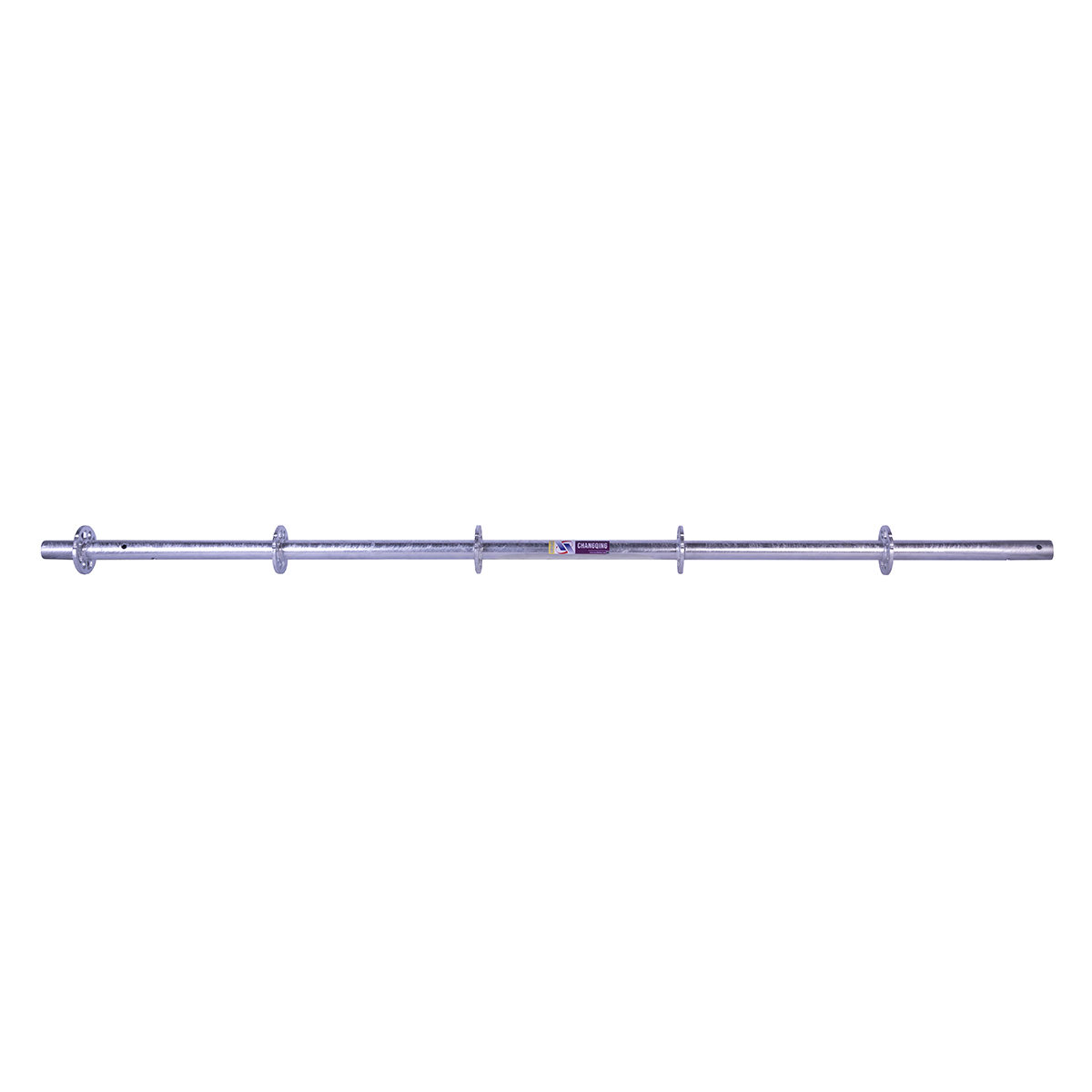
The ringlock scaffolding system uses a completely different node architecture. The vertical standard features a central rosette. Manufacturers weld these rosettes at 500mm intervals. Each rosette contains eight distinct holes. Four small holes accommodate right-angle connections. Four larger holes allow for diagonal braces and custom angles.
Workers connect ledgers and transoms using a wedge pin mechanism. Each horizontal component has a specialized cast end. This end slots over the rosette. The worker then drives a captive wedge pin through the rosette hole. A hammer blow secures the wedge pin tightly. Workers must lock each component individually.
This rosette design provides unmatched 360-degree positioning. You can create non-orthogonal shapes easily. It supports circular builds and multi-directional configurations. You do not need specialized fittings to change angles. The system adapts to virtually any structural footprint. It handles complex geometries without compromising load-bearing capacity.
The standard assembly sequence for a rosette node involves:
Set the base collars and insert the vertical standards.
Align the ledger cast end over the desired rosette hole.
Insert the captive wedge pin through the ledger head and rosette.
Drive the wedge pin down with a hammer until fully seated.
Install diagonal braces using the larger rosette holes to ensure structural rigidity.
Choosing the right equipment requires analyzing several technical dimensions. You must evaluate how each system performs under different site conditions. We will compare structural flexibility, assembly speed, load capacity, and inventory logistics.
Cuplock delivers exceptional efficiency in linear construction. It dominates straight-walled projects. The fixed 90-degree nodes make standard grid layouts simple. Workers can erect long, straight facades rapidly. The system requires minimal measuring or adjusting. It naturally aligns itself into perfect rectangles. However, this rigidity becomes a limitation on irregular sites. Cuplock struggles with curved walls or complex angles. You often need supplementary tube and coupler fittings to bypass these obstacles.
Ringlock dominates in complex environments. It handles circular structures effortlessly. You can build suspended platforms and multi-level towers. The eight-hole rosette allows for precise angle adjustments. It easily navigates around pipes, tanks, and irregular building profiles. Industrial environments rely heavily on this adaptability. Refineries and shipyards feature dense, unpredictable geometries. Ringlock navigates these spaces without requiring time-consuming modifications. It maintains structural integrity regardless of the shape.
Geometric Feature | Cuplock Capability | Ringlock Capability |
|---|---|---|
Straight Facades | Excellent. Self-squaring nodes speed up linear builds. | Good. Highly stable but requires individual pin locking. |
Circular Structures | Poor. Requires extensive tube and coupler modifications. | Excellent. Rosette allows smooth radius adjustments. |
Complex Angles | Limited. Fixed at 90 degrees. | Excellent. 360-degree positioning via 8-hole rosette. |
Suspended Platforms | Moderate. Requires specialized underslung components. | High. Wedge pins provide secure tension connections. |
Time-motion studies reveal clear differences in assembly speed. For simple structures, Cuplock is generally faster. A worker can secure up to four horizontals with one hammer strike. This simultaneous locking mechanism reduces physical fatigue. It minimizes the number of actions required per node. Repetitive, rectangular layouts benefit massively from this speed. Crews can cover large surface areas in less time.
Complex structures change the speed equation entirely. Ringlock requires individual wedge pin insertion. This process is marginally slower per node on straight runs. However, it is vastly faster overall on complex geometries. Ringlock eliminates time-consuming tube-and-coupler modifications. Workers do not waste time measuring and cutting custom tubes. They simply utilize the varied rosette holes. This adaptability keeps labor moving continuously on difficult sites.
Both systems provide exceptional load-bearing capacity. They easily exceed the safety limits of traditional methods. However, they handle stress and vibration differently. Cuplock creates a highly rigid node. The cup mechanism resists twisting forces effectively. It provides excellent stability for heavy-duty shoring. The single locking action ensures uniform tension across the joint.
Ringlock offers superior vibration resistance. The wedge pin design creates a tight, friction-locked connection. This connection absorbs dynamic loads well. It performs exceptionally in high-wind environments or industrial plants. Bracing integration also differs significantly. Ringlock diagonal braces connect directly to the rosette. They use the larger holes for perfect alignment. Cuplock often relies on face braces attached to the ledgers. The direct rosette connection provides a more efficient load path to the ground.
Inventory management impacts your operational efficiency. Cuplock generally requires fewer distinct part types for basic setups. You primarily manage standards, ledgers, and braces. The cup design often results in a marginally lighter standard. The hollow cups weigh less than solid steel rosettes. This weight difference aids in manual handling. It also allows for denser packing on transport trucks.
Ringlock requires managing a wider variety of components. You must track different wedge pins, specialized collars, and varied brace lengths. The solid rosettes add slight weight to the standards. However, this varied inventory pays off on site. It drastically reduces the need for supplementary tube-and-coupler additions. You avoid mixing different systems on irregular footprints. A well-managed Ringlock inventory handles any geometric challenge directly.
Logistical Factor | Cuplock Profile | Ringlock Profile |
|---|---|---|
Component Variety | Low. Standardized ledgers and cups cover most needs. | High. Multiple brace lengths and specialized collars required. |
Standard Weight | Slightly lighter due to hollow cup design. | Slightly heavier due to solid cast rosettes. |
Storage Footprint | Compact. Uniform components stack easily. | Moderate. Requires organized bins for varied pins and braces. |
Transport Density | High. Less dead space on flatbed trucks. | Moderate. Rosettes create slight gaps between stacked standards. |
Matching the equipment to the project profile is critical. You must analyze the specific demands of your upcoming jobs. We categorize the ideal scenarios for each system below. This mapping ensures you deploy the right tools for the right environment.
Commercial high-rises with uniform facades represent the perfect Cuplock environment. The straight, repetitive nature of these buildings maximizes the system's speed. Workers can establish a rhythm quickly. Straight masonry and bricklaying projects also benefit heavily. The rigid right angles support heavy material loads safely. The fast erection time keeps access ahead of the masonry crews.
Standard rectangular shoring and formwork support are excellent use cases. The high load capacity of the standards supports massive concrete pours. The simple grid layout aligns perfectly with standard formwork panels. You achieve maximum stability with minimal component variation. Cuplock streamlines these straightforward, heavy-duty applications effectively.
Industrial maintenance demands extreme adaptability. Offshore rigs, refineries, and chemical plants feature dense piping networks. Ringlock navigates these obstacles effortlessly. The multi-angle rosettes allow workers to build around complex machinery. Boiler maintenance requires working within confined, irregular spaces. The system adapts to these tight geometries without compromising safety.
Curved architectural facades and historical restorations require precise contouring. Ringlock follows curved walls smoothly. It provides safe, close access to irregular surfaces. Circular tanks and silos are standard applications. The system forms perfect rings around these structures. Event staging and lighting rigs also rely on this flexibility. Multi-level temporary access with irregular footprints demands the 360-degree positioning that only rosettes provide.
Standard modular systems sometimes fall short of extreme project demands. You must evaluate when bespoke engineering becomes necessary. Unique spatial constraints often require specialized bridging or cantilevered platforms. Extreme wind loads or seismic conditions demand specific structural reinforcements. In these scenarios, you need custom scaffolding solutions.
Integrating standard components with bespoke engineering requires careful planning. You must calculate precise load paths and shear stresses. Both systems can integrate with custom-fabricated trusses or heavy-duty beams. However, the connection points must be engineered flawlessly. Always consult with structural engineers when pushing modular systems beyond standard configurations.
Procuring a scaffolding system involves significant supply chain risks. Structural failure leads to catastrophic consequences. You must implement strict quality control measures. Verifying material integrity is non-negotiable. We outline the critical steps for mitigating sourcing risks below.
The global supply chain presents risks of counterfeit components. Mixed-grade steel can compromise an entire structure. You must verify the specific steel grade used in manufacturing. High-tensile steel, such as Q345, offers superior strength-to-weight ratios compared to standard Q235 steel. Ensure your supplier uses the correct grade for load-bearing components.
Weld penetration is another critical failure point. The welds connecting cups or rosettes to the standard must be flawless. Incomplete welds shear under heavy loads. You must demand independent weld testing reports. Inspect the durability of wedge pins and forged ledger blades. Permanent traceability stamps on components are essential. These stamps allow you to track manufacturing batches if defects arise.
Vetting a scaffolding manufacturer requires strict criteria. Do not rely solely on marketing materials. Demand proof of ISO certifications. ISO 9001 ensures consistent quality management systems. Request independent load testing reports from recognized engineering firms. These reports validate the stated load capacities of the components.
Evaluate the technical support offered by the manufacturer. The best suppliers provide comprehensive engineering support. They offer 3D modeling for complex site planning. This modeling helps calculate exact component requirements and load distributions. A manufacturer who understands structural engineering adds massive value to your procurement process. They become a partner in site safety rather than just a material vendor.
Define your standard load requirements and maximum height limits for upcoming projects.
Map out your typical geometric constraints, noting the frequency of curved or irregular structures.
Audit your current inventory to identify compatibility issues with new modular systems.
Request technical specifications, steel grade certificates, and load capacity charts from certified manufacturers.
Conduct a time-motion trial on a mock setup to evaluate crew training requirements.
A: Cuplock is generally faster for straight, rectangular structures because a single hammer blow locks up to four horizontals simultaneously. Ringlock requires individual wedge pin insertion, making it slightly slower on straight runs. However, Ringlock is significantly faster on complex, irregular geometries because it eliminates the need for time-consuming custom modifications.
A: You should never mix components from different systems within the same structural bay. The node connections, load transfer mechanics, and standard dimensions are fundamentally incompatible. Mixing them compromises structural integrity and violates safety regulations. You can use them on the same site only if they form completely independent, physically separated structures.
A: Cuplock standards are often marginally lighter because the hollow steel cups weigh less than the solid steel rosettes used in Ringlock. However, the overall system weight depends heavily on the specific steel grade used by the manufacturer and the density of bracing required for the specific structural configuration.
A: Ringlock is vastly superior for circular, curved, and complex multi-level structures. The central rosette features eight distinct holes, allowing for 360-degree positioning and precise multi-angle connections. This design adapts seamlessly to irregular building profiles, tanks, and industrial piping without requiring supplementary tube and coupler fittings.
A: You must inspect all nodes for weld integrity, deformation, and severe corrosion before every assembly. For Ringlock, ensure the rosette holes are clear of debris and the wedge pins remain straight and captive. For Cuplock, verify that the sliding top cup moves freely and the bottom cup welds show no signs of cracking or stress fatigue.
A: Yes, both systems provide exceptional load-bearing capacity suitable for heavy-duty shoring and concrete formwork. Cuplock is often preferred for standard rectangular slab support due to its rigid 90-degree grid alignment. Ringlock is equally capable of supporting heavy loads but is typically chosen when the shoring footprint involves irregular shapes or complex ground conditions.


