
Views: 0 Author: Site Editor Publish Time: 2026-11-16 Origin: Site


Mining maintenance projects operate under extreme pressure. Heavy industrial equipment, harsh environments, and strict shutdown schedules amplify the consequences of any structural failure. Traditional, ad-hoc scaffolding methods consistently fall short in these demanding settings. They struggle against ground instability, corrosive conditions, and the complex geometries of crushers, conveyors, and processing facilities. Temporary structures directly impact the overall quality, safety, and profitability of the entire maintenance operation. Site managers and safety engineers need reliable alternatives to keep crews safe and projects on track. Implementing modular scaffolding serves as the engineered baseline to mitigate these risks. It provides the predictability, load capacity, and strict compliance frameworks required for technical evaluation and safe execution. We rely on these systems to eliminate guesswork, stabilize work platforms, and ensure maintenance crews can execute their tasks without worrying about the ground beneath their feet.
Mining environments demand scaffolding systems engineered for dynamic loads, high corrosion resistance, and uneven terrain.
Modular scaffolding reduces erection time and human error during critical plant shutdowns through standardized, interlocking components.
Specific component choices—such as galvanized steel planks and diagonal bracing—are non-negotiable for maintaining structural integrity under industrial stress.
Evaluating scaffolding providers requires looking beyond upfront costs to assess long-term durability, compliance with edge protection standards, and comprehensive inspection protocols.
Open-pit mines and processing facilities rarely offer pristine, level concrete slabs for scaffold foundations. Crews frequently build on uncompacted fill, tailings, or uneven rock. These unstable foundations pose severe risks to temporary structures. Scaffold bases must distribute massive point loads safely across varied terrain to prevent differential settlement. We use heavy-duty sole boards and adjustable base jacks to manage ground bearing pressure. If one leg sinks into soft mud after a heavy rainstorm, the entire structure shifts. This movement pulls wall ties loose, distorts the node connections, and can trigger a progressive collapse.
Severe weather patterns compound the problem. High winds exert massive lateral forces on sheeted scaffolds, while heavy rain erodes the uncompacted soil directly beneath the base plates. Vibration from nearby heavy machinery, such as 400-ton haul trucks or primary crushers, transfers directly into the scaffold frame. This constant oscillation threatens structural integrity over time. Adjacent structures, overhead power lines, and moving equipment often interfere with the scaffold footprint. A successful scaffolding system must accommodate variable base elevations and fit within tight spatial constraints without compromising vertical alignment.
Conduct a thorough ground bearing pressure test before laying the first sole board.
Identify and map all overhead power lines and adjacent moving machinery.
Establish a clear perimeter to protect the scaffold base from vehicle strikes.
Calculate the required base jack extension limits to accommodate uneven terrain safely.
Maintenance crews rely on platforms to support heavy tooling, replacement parts, and multiple personnel simultaneously. When changing out a conveyor drive motor or repairing a ball mill, the scaffold must hold the weight of the workers, their welding gear, heavy torque wrenches, and the replacement components themselves. Standard scaffolding materials degrade rapidly in these environments. Acidic mine water, abrasive dust, and chemical processing agents eat away at unprotected steel. High-grade, corrosion-resistant materials form the baseline requirement for any viable scaffolding solution.
Static loads from stacked materials and dynamic loads from moving workers place immense stress on the platform. Standard painted steel tubes rust from the inside out when exposed to saline water or sulfuric acid commonly found in copper extraction plants. This internal corrosion remains hidden until the component fails under load. Industrial sites require materials that withstand continuous chemical attack while maintaining their original load-bearing capacity. We cannot risk a platform giving way because a ledger rusted through from the inside.
Mining shutdowns cost thousands of dollars per hour in lost production. Time is the most heavily scrutinized metric during a turnaround. Scaffolding is often the first activity in and the last activity out. Rushed scaffolding erection and dismantling introduce severe safety risks. Complex or non-standardized systems increase the likelihood of skipped steps and improper connections. When plant managers push for faster access, scaffolders might cut corners if the system is difficult to assemble.
Missing ties, incomplete bracing, or unsecured planks become common hazards when crews fight against the clock. The scaffolding system must facilitate rapid assembly without sacrificing structural safety. Predictable erection times allow planners to schedule maintenance tasks accurately, reducing overall shutdown duration. If the scaffold takes twelve hours to build instead of the allocated eight, the entire maintenance schedule shifts, costing the operation heavily.
Traditional tube-and-clamp systems rely heavily on worker skill. Scaffolders must manually measure and secure every connection using loose couplers. This process is slow to build and prone to inconsistencies. If a worker fails to tighten a coupler to the correct torque, that joint becomes a weak point. Modern industrial scaffolding solutions eliminate this guesswork entirely. Modular systems utilize fixed connection points known as nodes. These nodes dictate precise angles automatically. This engineering significantly reduces the margin for human error during assembly.
Feature | Tube-and-Clamp System | Modular Scaffolding |
|---|---|---|
Connection Method | Loose couplers requiring manual measurement and tightening with a wrench. | Fixed node points with wedge-lock mechanisms secured by a hammer strike. |
Erection Speed | Slow, labor-intensive, highly dependent on the individual worker's skill level. | Fast, standardized assembly with highly predictable project timelines. |
Angle Accuracy | Requires constant checking with spirit levels and squares to maintain plumb. | Pre-engineered nodes force automatic 90-degree alignment. |
Load Distribution | Variable, depending on the exact placement and torque of the couplers. | Engineered and consistent, transferring loads directly through the standards. |
Inspection Process | Complex, requires physically checking the torque on every single fitting. | Visual inspection of wedge seating is fast, reliable, and highly accurate. |
Standardized components streamline the erection process. Crews assemble the framework rapidly, allowing for predictable project timelines during critical maintenance windows. We deal with a specific set of interchangeable ledgers, standards, and transoms. This uniformity aids in faster, more accurate safety inspections. Competent persons can quickly verify node connections prior to tagging the scaffold for use. You do not have to guess if a ledger is at the correct height; the node positions dictate the spacing.
A visual inspection of a modular system is highly effective. Inspectors can see from ground level if a wedge is fully driven home. This contrasts sharply with traditional fittings, which require a wrench to verify torque on every single bolt. Standardization also simplifies inventory management. Site logistics improve when crews load trucks with uniform components rather than sorting through bins of mixed, loose fittings. This efficiency translates directly to faster deployment on the mine site.
Timber boards fail rapidly in mining contexts. They absorb moisture, rot, and splinter under heavy use. Dropping a heavy steel valve onto a timber board often cracks it, compromising the safe working load immediately. Specifying a kwikstage galvanized steel plank provides distinct structural advantages. These planks eliminate rot entirely. They resist chemical degradation from processing agents and acidic water. Non-slip surface profiles ensure safe footing in wet, muddy conditions. They deliver predictable safe working load limits for heavy equipment.
Steel planks lock securely into the transoms, preventing wind uplift. This locking mechanism is vital in open-pit mines exposed to high winds, where loose timber boards can become dangerous projectiles. The weight-to-strength ratio of galvanized steel outperforms timber, allowing for longer spans without sagging. Consistent load capacities mean engineers can calculate platform limits with absolute certainty. We know exactly how much weight a bay can hold, allowing maintenance planners to stage equipment safely.
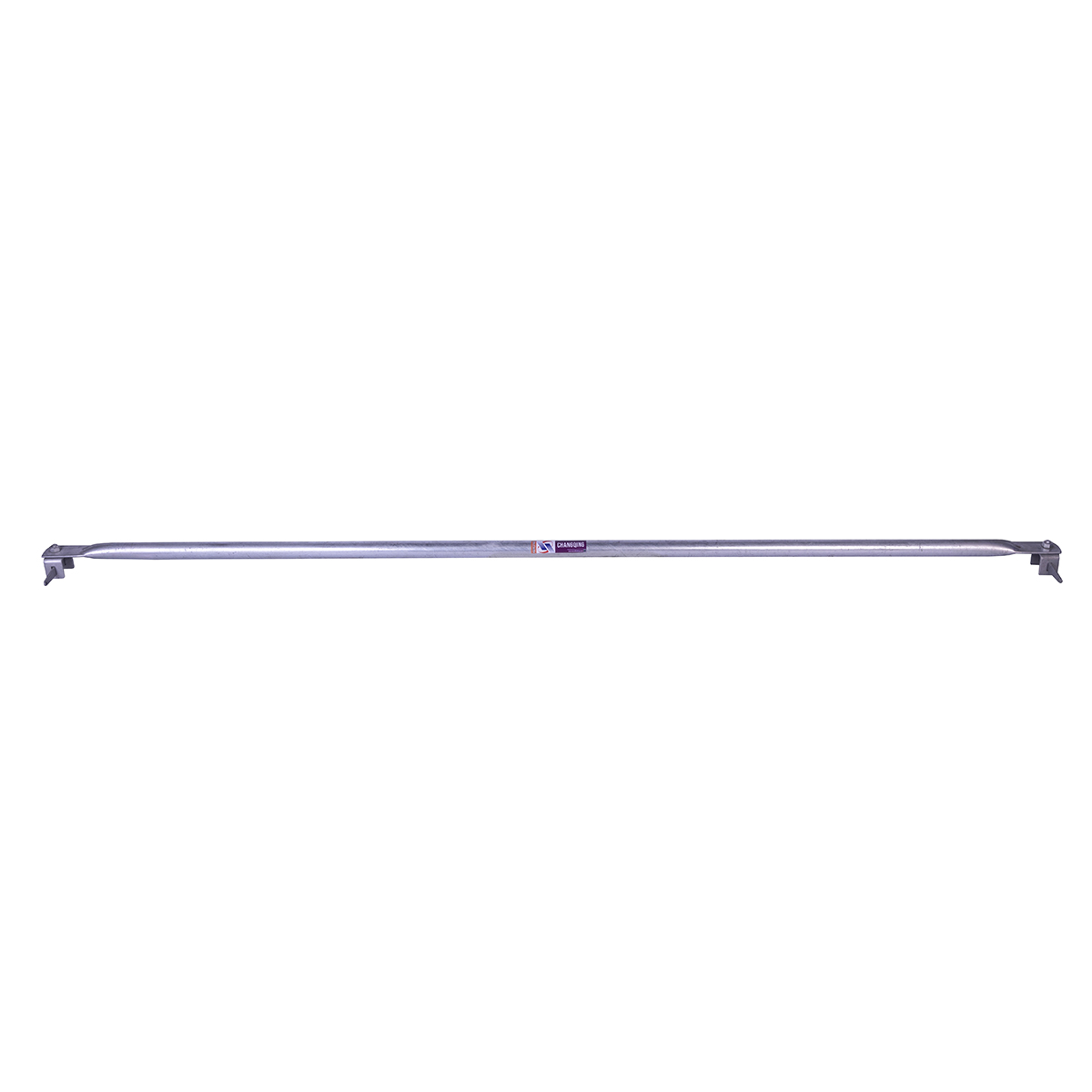
Diagonal bracing prevents scaffold sway and structural twisting under dynamic loads. It triangulates the framework, transferring lateral forces down to the base. The kwikstage diagonal brace for scaffold stability integrates seamlessly into the modular system. It locks the framework into a rigid, load-distributing structure. Omitting or improperly installing diagonal braces in high-vibration mining environments invites catastrophic collapse. A scaffold without proper bracing is essentially a house of cards waiting for a lateral push.
When heavy machinery operates nearby, the ground transmits vibrations directly into the scaffold standards. Without diagonal bracing, these vibrations cause the structure to oscillate. This movement loosens wall ties and destabilizes the platform. Proper bracing absorbs and distributes these forces, keeping the working deck stable and secure. We install face bracing and plan bracing according to strict engineering guidelines to ensure the structure remains rigid, even when subjected to the heavy foot traffic of a maintenance crew.
Falls from height remain the leading critical risk in maintenance operations. Regulatory thresholds mandate strict fall protection, typically for any work over 1.8 meters. Compliant edge protection requires top rails, mid rails, and toe boards. Adhering to strict kwikstage edge protection standards ensures guardrails are mechanically locked in place. This prevents accidental dislodgement by workers leaning against them or heavy equipment bumping into the frame.
Toe boards prevent tools, bolts, and debris from kicking off the platform and striking personnel working below. A dropped wrench from twenty feet up can be fatal. Top rails must withstand significant lateral force in case a worker falls against them. Modular edge protection integrates directly into the standard nodes. This eliminates the need for loose clamp-on fittings that can slip down the tube under pressure. The system forces compliance because the guardrails only fit into the designated, engineered node points.
Mining plants feature awkward structures like cylindrical tanks, inclined conveyors, and confined spaces. Utilizing kwikstage scaffolding for mining maintenance allows crews to adapt to these complex geometries. Specialized modular components, such as hop-up brackets and return transoms, provide customized access. They achieve this without compromising the engineered integrity of the core system. We can build around a massive crusher housing, stepping the platforms to match the contours of the machinery.
Hop-up brackets allow scaffolders to extend the working platform closer to the equipment face. This eliminates dangerous gaps between the scaffold and the machinery, preventing falls through the void. Crews can navigate around pipe racks and cable trays without modifying the main scaffold bay. This adaptability ensures workers always have a safe, flush surface to operate from, regardless of how convoluted the plant layout might be.
Evaluating scaffolding requires looking at long-term operational impacts. Heavy-duty, hot-dip galvanized modular systems carry a higher initial procurement cost. However, they deliver substantial long-term savings. They reduce replacement costs, minimize maintenance, and cut labor hours during assembly. Cheaper painted alternatives degrade quickly, forcing frequent replacements and causing unsafe working conditions. A rusted scaffold is a condemned scaffold, meaning you have to tear it down and rebuild it, doubling your labor costs.
Hot-dip galvanizing coats both the inside and outside of the steel tubes with a thick layer of zinc. This zinc layer acts as a sacrificial barrier against rust. Paint or powder coating only protects the exterior and chips easily during transport and assembly. Once the paint chips, moisture enters, and the steel begins to rust. Investing in high-quality galvanization ensures the scaffolding inventory survives years of harsh mining conditions, providing reliable access for dozens of shutdown cycles.
Even the best modular scaffolding is unsafe if erected by unqualified personnel. All scaffolding must be erected, moved, altered, and dismantled exclusively by a competent person. This follows strict occupational health and safety guidelines. It prevents unauthorized modifications by maintenance crews. Specialized training in modular systems is absolutely necessary. A worker who knows how to build a timber deck does not necessarily know how to calculate the leg loads on a 30-meter high modular tower.
A competent person understands load calculations, tie-in patterns, and bracing requirements. They issue the handover certificate once the build is complete, legally verifying the structure is safe for use. Site managers must verify the credentials of the scaffolding contractor before work begins. Ongoing toolbox talks keep safety protocols fresh in the minds of the erection crew, ensuring they do not become complacent with the repetitive nature of the work.
Enforcing critical user behaviors during the maintenance phase prevents accidents. Maintenance workers often lack scaffolding knowledge, making strict rules necessary. They view the scaffold simply as a means to reach their work, not as an engineered structure that can fail if abused.
Do not overload platforms beyond the posted safe working load limits.
Do not remove ties, guardrails, or braces to gain easier access to equipment.
Maintain clear access and egress points at all times, keeping stairways unobstructed.
Keep platforms entirely free of debris, loose bolts, and tripping hazards.
Use proper hoisting equipment instead of manually pulling heavy parts up the side of the scaffold.
Report any structural damage, such as a bent standard or cracked plank, immediately to the safety supervisor.
Scaffold inspections require strict frequency and depth. Crews must conduct pre-use, post-weather event, and weekly inspections. A strict tagging system clearly communicates the safety status to maintenance crews. Green tags indicate the scaffold is fully compliant and safe for use. Yellow tags warn of specific hazards, such as a modified section or incomplete handrails, requiring a harness. Red tags prohibit access entirely. Auditors must check individual components before deployment. They look for bent frames, cracked welds, loose components, or severe corrosion.
Verify ground stability and check sole boards for signs of sinking, cracking, or washout.
Inspect all base jacks to ensure they are plumb and not extended beyond their engineered limits.
Check every node connection to confirm wedges are fully driven home and secure.
Ensure all steel planks are seated correctly and locked down against potential wind uplift.
Confirm edge protection is continuous, with no missing top rails, mid rails, or toe boards.
Audit your current scaffolding inventory to identify and remove any degraded or non-compliant timber and painted steel components.
Schedule a site-specific risk assessment with a qualified scaffolding engineer prior to your next major plant shutdown.
Transition your procurement specifications to mandate hot-dip galvanized modular systems for all future maintenance access requirements.
Implement a strict, color-coded tagging system across all active work platforms to control access and communicate inspection status.
A: Modular scaffolding utilizes pre-engineered, fixed connection points that dictate precise angles automatically. This eliminates the guesswork and manual measuring required by traditional tube-and-clamp methods. The standardized interlocking components reduce human error during assembly, providing predictable load capacities and superior structural rigidity. This ensures a stable working platform even under heavy industrial stress.
A: Galvanized steel planks eliminate the risk of rot and splintering common with timber boards. They resist chemical degradation from acidic mine water and processing agents. Additionally, they feature non-slip surface profiles that ensure safe footing in wet industrial conditions, and they lock securely into place to prevent wind uplift.
A: Diagonal bracing prevents structural twisting and sway under dynamic loads. It triangulates the framework, transferring lateral forces and vibrations from heavy machinery down to the base. This locking mechanism prevents the loosening of wall ties and node connections, avoiding catastrophic collapse in high-vibration mining environments.
A: Compliant edge protection requires the installation of top rails, mid rails, and toe boards. These components must be mechanically locked into the standard node points. This prevents accidental dislodgement by workers or heavy equipment, mitigating the critical risk of falls from height and preventing dropped objects.
A: Standardized components streamline the erection and dismantling process. Crews can assemble the framework rapidly and accurately without measuring every joint. This predictability ensures maintenance windows stay on schedule, minimizing the thousands of dollars lost per hour during critical plant turnarounds and shutdowns.
A: Uneven, shifting ground conditions and uncompacted fill weaken base supports. Severe weather, high winds, and heavy rain further destabilize the foundation by eroding soil. Additionally, constant vibration from nearby heavy machinery transfers stress directly into the temporary structure, increasing the risk of component failure.
A: Unauthorized modifications, such as removing ties, guardrails, or braces, compromise the engineered integrity of the entire structure. Removing a single brace can destabilize a tower. Only a competent person trained in occupational health and safety guidelines should erect, move, alter, or dismantle scaffolding to prevent fatal accidents.


