
Views: 0 Author: Site Editor Publish Time: 2026-11-06 Origin: Site


Shipyard maintenance operates under extreme constraints. Aggressive saltwater environments, complex vessel geometries, and unforgiving dry dock schedules mean every hour of downtime compounds operational costs. Traditional tube-and-clamp scaffolding requires excessive skilled labor to erect. It lacks the rigidity required for heavy maritime equipment and struggles to safely adapt to the curved hulls of modern vessels. Upgrading to a standardized modular scaffolding system is a critical capital or rental decision. You need equipment that deploys fast and holds up against coastal winds. This guide breaks down the technical criteria, safety components, and vendor evaluation frameworks necessary to select a system that balances rapid deployment with maritime safety compliance. We will look at specific load requirements, environmental containment, and how to navigate confined spaces like ballast tanks.
Erection Speed vs. Adaptability: Modular systems reduce erection and dismantling times by up to 50% compared to traditional methods, directly reducing vessel time-in-dock.
Corrosion Resistance is Non-Negotiable: Hot-dipped galvanized finishes are mandatory for all structural components to prevent catastrophic failure in saline environments.
Standardized Safety: Utilizing purpose-built components like locking steel planks and integrated toe boards mitigates the high risk of dropped objects and slip-and-fall incidents in shipyards.
Environmental Containment Readiness: Modern systems must seamlessly support shrink-wrap encapsulation for abrasive blasting and painting without compromising structural stability under high wind loads.
Vendor Engineering Capability: The right supplier must provide more than raw materials; they must offer 3D modeling and engineering support for complex over-water and confined-space builds.
Saltwater exposure accelerates metal degradation rapidly. High humidity, coastal winds, and constant moisture create a highly corrosive atmosphere inside any dry dock. Unprotected steel rusts and weakens within weeks under these harsh conditions. We must establish a strict baseline for protective coatings to ensure safety. Material thickness also plays a vital role in maintaining structural integrity. Equipment must survive multiple maintenance cycles without compromising load capacity. Paint and basic electroplating simply cannot withstand the daily abuse of a working shipyard. You need heavy-duty metallurgical protection to prevent unseen structural decay. When salt spray settles on joints and base plates, it initiates galvanic corrosion. If your gear lacks a thick zinc coating, you will end up replacing rusted components after just one or two vessel turnarounds.
Scaffolding around bulbous bows, variable pitch propellers, and rudders is notoriously difficult. These curved surfaces reject rigid, square frameworks. Confined space entry poses another major logistical hurdle. Ballast tanks, cargo holds, and engine rooms feature tight access points. Crews need a framework that handles variable angle connections smoothly. Cantilevered platforms are often necessary to reach overhanging deck sections. Furthermore, components must be sized appropriately. They have to pass through standard vessel manholes without requiring excessive maneuvering or specialized lifting gear. Try passing a bulky, non-standard frame through an 18-inch hatch while wearing full fall protection. It slows the job to a crawl. You need modular pieces that workers can easily hand down into the hull and assemble in tight quarters.
Strict environmental regulations govern abrasive blasting and marine coating applications. These rules usually require full scaffolding encapsulation using heavy shrink-wrap. Wrapping a structure effectively turns it into a massive sail. A reliable framework must be engineered to withstand this significant increase in wind loads. Containment sheeting catches coastal gusts, putting immense stress on connections and base plates. The system must remain perfectly rigid. Any sway or deflection can tear the containment wrap, leading to environmental fines and project delays. When a 50-knot gust hits a fully wrapped destroyer hull, the scaffold cannot buckle. The connections must hold the lateral force without transferring dangerous stress to the vessel's hull.
Dry dock rental costs are astronomical. Out-of-service vessels drain revenue every single day they sit out of the water. Scaffolding erection and dismantling phases are primary bottlenecks during maintenance. You must engineer efficiency into these stages to protect the project timeline. Speeding up access directly translates to faster hull repairs and painting. Every shift saved on scaffolding assembly allows the specialized trades to begin their work sooner. Efficient access equipment is not just a safety requirement; it is a core driver of operational profitability. If your scaffolders take four days to build access for the welders, you lose four days of production. Cutting that build time in half changes the entire financial outcome of the maintenance schedule.
Traditional tube and clamp setups rely heavily on specialized scaffolding labor. Assembly times are painfully slow. Workers must manually measure, level, and tighten individual couplers for every single joint. This increases the risk of human error significantly. A single loose fitting can compromise an entire platform section. Fatigue sets in quickly when workers have to torque hundreds of bolts per shift. Furthermore, tube and clamp systems struggle to support the massive dead weights generated by accumulated abrasive blasting grit. When workers spend half their shift swinging a wrench to tighten friction couplers, productivity drops. The friction grip of a standard coupler also has load limits that heavy shipyard work easily exceeds.
Modern yards are shifting toward standardized solutions to eliminate these inefficiencies. These systems utilize fixed connection points known as rosettes. This design enforces standardized, plumb, and square structures automatically. Workers spend less time measuring and more time building. The inherent geometry of the components ensures perfect alignment. You simply slide the ledger head over the rosette and hammer the wedge tight. This intuitive assembly process drastically reduces the learning curve for new crews. Instead of relying on a few master scaffolders to level every tube, your entire crew can assemble the framework rapidly following a basic grid plan.
A ringlock scaffolding system for shipyards stands as the undisputed industry standard. It handles maritime applications exceptionally well. The mechanics of the rosette and wedge-lock design are brilliant. They allow up to eight connections at various angles from a single node. This flexibility is ideal for contouring around circular or curved ship hulls. The positive locking mechanism provides instant visual confirmation that the joint is secure. Supervisors can inspect a massive build rapidly just by looking at the wedge positions. If the wedge is driven down, the joint is locked. There is no need to put a wrench on every fitting to check the torque.
Feature / Capability | Traditional Tube & Clamp | Modular Ringlock System |
|---|---|---|
Erection Speed | Slow; requires manual measuring and leveling for every connection. | Fast; fixed rosettes automatically align and square the structure. |
Labor Requirement | High reliance on highly skilled, specialized scaffolders. | Requires less specialized labor due to standardized assembly steps. |
Adaptability to Curves | High; couplers can be placed anywhere on the tube. | High; rosettes allow up to 8 connections at multiple angles. |
Load Capacity | Moderate; limited by the friction grip of individual couplers. | Very High; positive wedge-lock connections support heavy maritime loads. |
Inspection Speed | Slow; every bolt must be physically checked for proper torque. | Fast; visual inspection of wedge locks confirms structural integrity. |
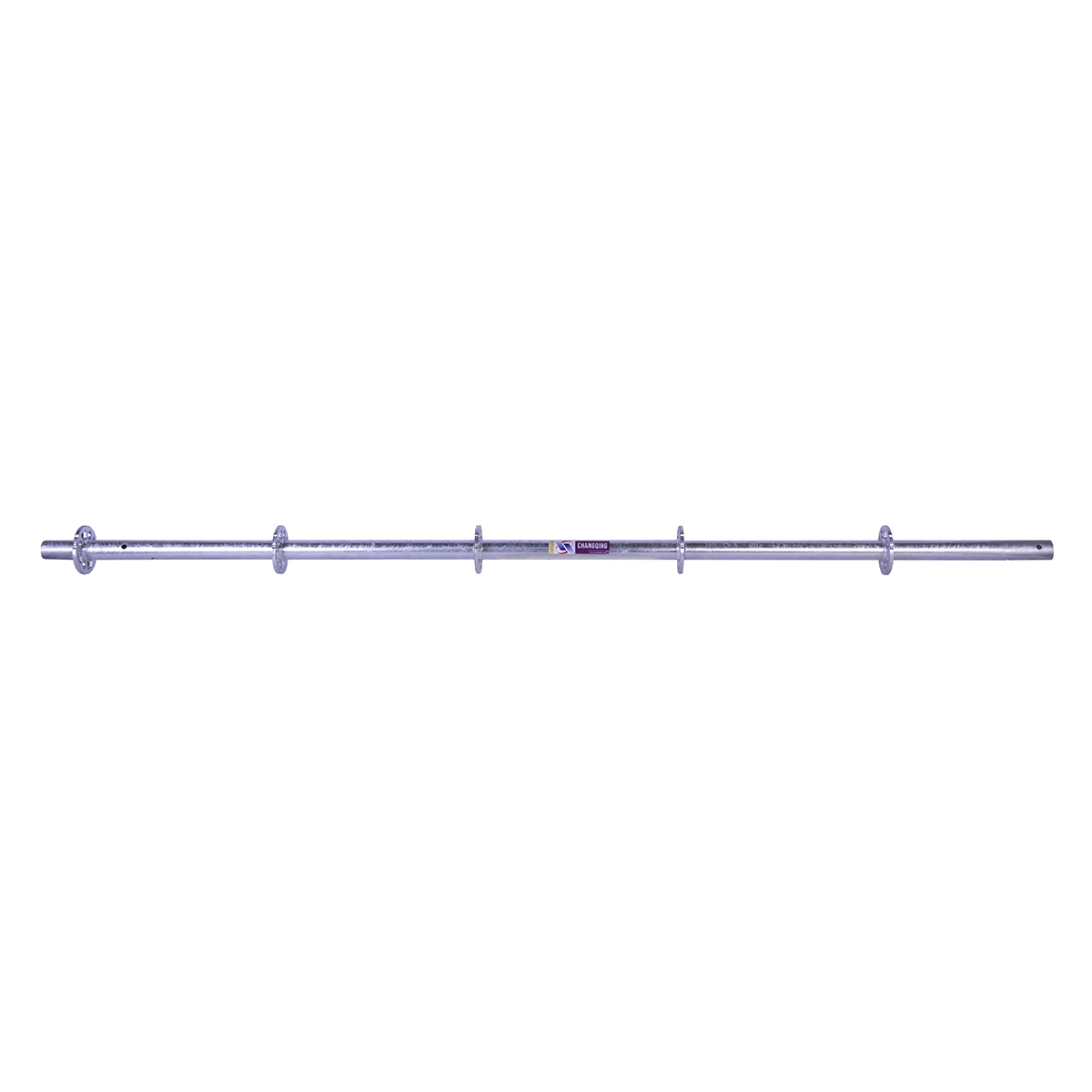
You cannot compromise on material finishes in a marine environment. Utilizing galvanized ringlock scaffolding components is an absolute necessity. Painted or electro-galvanized alternatives degrade too quickly when exposed to salt spray. Hot-dipped galvanization coats both the inside and outside of ledgers and standards. This thorough coating prevents hidden internal rust from destroying the tubes from within. The zinc coating forms a metallurgical bond with the steel, providing sacrificial protection even if the surface is scratched by heavy tools. When a crane accidentally drags a steel plate across a galvanized standard, the zinc layer takes the hit, leaving the structural steel intact and safe from rapid oxidation.
Shipyard tasks demand extremely high load classes. Abrasive blasting, heavy welding, and component replacement require robust support. Premium systems use high-tensile steel to support heavier live loads safely. This strength means you need fewer vertical standards, freeing up valuable workspace on the deck. Base collars and heavy-duty jack plates are equally important. They distribute point loads safely across thin vessel decking or uneven dry dock grates. Proper weight distribution prevents deck deformation and ensures the entire scaffold remains stable under heavy use. If you stack tons of spent blasting media on a platform, the vertical standards must transfer that weight down to the base plates without buckling.
Creating a secure working deck is critical for maritime operations. A ringlock steel plank with hooks ensures a flush, gap-free surface. These locking planks cannot be accidentally dislodged by high winds. They also stay put during heavy worker movement. Integrating a ringlock toe board for work platforms is just as vital. It helps you comply with strict maritime safety regulations regarding falling tools and debris. A continuous toe board barrier prevents blasting grit and loose bolts from striking workers stationed on lower levels. When a welder drops a heavy grinder, the toe board stops it from kicking off the edge and causing a fatal injury below.
Modular stair towers offer massive safety and ergonomic benefits over traditional vertical ladders. Integrated stairways reduce worker fatigue significantly. They also lower slip-and-fall risks dramatically. Shipyard workers frequently carry heavy tools and welding equipment across multiple deck levels. Climbing a fifty-foot vertical ladder with a heavy tool belt is dangerous and exhausting. Stairs provide the stability needed for these demanding tasks. They also allow for rapid evacuation in the event of a shipyard emergency. If a fire breaks out in a cargo hold, crews can run up a stair tower much faster and safer than they can bottleneck at a single vertical ladder.
Purchasing an advanced system requires a higher upfront cost compared to basic tube and clamp materials. However, the long-term ROI is undeniable. Labor savings alone quickly offset the initial investment. When your crews can erect and dismantle structures twice as fast, your labor overhead plummets. Reduced maintenance further improves the financial outlook. Galvanized components do not require constant wire-brushing and repainting. A well-maintained modular system easily boasts a 10-to-15-year component lifespan, delivering exceptional value over countless dry dock cycles. You spend more on the initial purchase order, but you stop bleeding money on extended dry dock fees and wasted labor hours.
Uniform modular components offer excellent logistical advantages. They are incredibly easy to palletize for organized yard storage. Crane-lifting bundled materials into dry docks is highly efficient. Standardized lengths allow yard managers to conduct visual inventory checks quickly. However, there is a trade-off to consider. These systems require strict inventory tracking. Missing specialized components, like specific ledger lengths or diagonal braces, can instantly halt a build. You must implement robust check-in and check-out procedures to prevent material loss. If a crew drops a bundle of 7-foot ledgers into the harbor, you cannot just cut a random pipe to fit. You need the exact modular piece to continue the build.
Crews accustomed to traditional methods may initially struggle with modular constraints. They might try to force connections or bypass standard leveling procedures. To mitigate this, mandate vendor-led training sessions. Focus heavily on proper wedge-lock seating and correct rosette utilization. Workers must understand how to square the base lift perfectly. If the base is out of level, the entire modular structure will bind as it goes higher. Hands-on training ensures rapid adoption and prevents dangerous assembly shortcuts. Once the crew understands that a perfectly level base lift makes the rest of the build effortless, their productivity will skyrocket.
Failing safety inspections is a major risk that can shut down a dry dock. Improper assembly or mixed-manufacturer components often cause these failures. Implement strict QA/QC checklists to prevent this. Utilize scaffolding design software to verify load calculations before moving any steel. Ensure all designs meet regulatory codes before erection begins. Supervisors must sign off on every lift, verifying that all wedges are hammered home and all locking planks are properly seated. You cannot afford an OSHA or NAVSEA inspector finding unseated wedges or missing toe boards on a massive hull scaffold.
Mixing OEM components with cheap, non-certified aftermarket parts is incredibly dangerous. It frequently leads to catastrophic structural failure under heavy loads. Counterfeit parts often use inferior steel grades and poor welding techniques. Establish a strict single-source procurement policy. Always require material test reports (MTRs) for all incoming batches to verify quality. Your procurement team must verify the origin and testing standards of every component entering the shipyard. A visual inspection is not enough; you need the metallurgical paperwork to prove the steel can handle the stated load capacities.
A qualified scaffolding supplier for shipyard maintenance must offer robust in-house engineering. They should provide 3D scaffold designs tailored to specific vessel blueprints. They must also solve complex containment requirements effectively. A supplier who only sells raw steel is not a true partner. You need a team that understands the unique physics of over-water builds and wind load calculations. They should be able to provide stamped engineering drawings when required by port authorities. If you are building a cantilevered platform over open water to repair a rudder, you need engineered drawings, not guesswork.
Look for suppliers holding ISO 9001 certification. Request independent load-testing documentation for their specific product lines. Ensure all components are batch-stamped for full traceability from the foundry to your dry dock. If a component fails, you need to be able to trace its exact manufacturing origin. High-quality suppliers welcome these audits and keep meticulous records of their steel sourcing and galvanization processes. They will gladly hand over the MTRs for every single ledger and standard in your order.
Evaluate the supplier's ability to rapidly deliver replacement parts. Emergency dry dock repairs often require additional tonnage on extremely short notice. A reliable partner maintains deep inventory reserves to support unexpected project expansions. Ask about their logistics network and typical lead times for large orders. If they cannot guarantee rapid delivery during peak maintenance seasons, they will eventually cause costly delays in your operational schedule. When a vessel comes in with unexpected hull damage, you need extra steel delivered to the yard within 48 hours, not four weeks.
Conduct a comprehensive audit of your current scaffolding labor costs and downtime metrics.
Request a pilot 3D design and load calculation from a shortlisted supplier for an upcoming vessel schedule.
Verify material test reports and galvanization standards before committing to a purchase or rental agreement.
Schedule hands-on training sessions for your erection crews to ensure smooth adoption of the new equipment.
A: Modular frameworks drastically reduce erection and dismantling times. They use fixed rosette angles to safely contour around complex ship hulls. This standardized approach eliminates the guesswork and slow assembly associated with traditional tube and clamp methods, getting vessels back in the water faster.
A: When properly hot-dipped galvanized, these components boast a 10 to 15-year lifespan. This durable finish protects both internal and external steel surfaces, heavily outperforming painted steel which degrades rapidly in corrosive saltwater conditions.
A: While wooden planks are sometimes used, steel planks with hooks are highly recommended. They offer superior safety, provide vital fire resistance during welding operations, and prevent dangerous uplift from strong coastal winds.
A: It creates a continuous, rigid barrier at the deck level. This is strictly required by maritime safety standards to prevent tools, debris, and abrasive blasting materials from falling onto workers stationed below.
A: Yes, with proper engineering. Advanced modular systems utilize lattice girders and specialized suspension components. These allow crews to build safe, suspended platforms over water for hull repairs and painting without relying on bottom support.
A: Modular systems provide rigid, uniform frameworks that easily support shrink-wrap encapsulation. However, engineering teams must carefully account for the significantly increased wind loads placed on the structure by the containment sheeting.
A: Emphasize the need for in-house engineering support and 3D modeling capabilities. Ensure they offer strict material traceability through MTRs and maintain large inventory reserves for rapid, emergency deployment during critical dry dock phases.


